

 Image 1 of 4
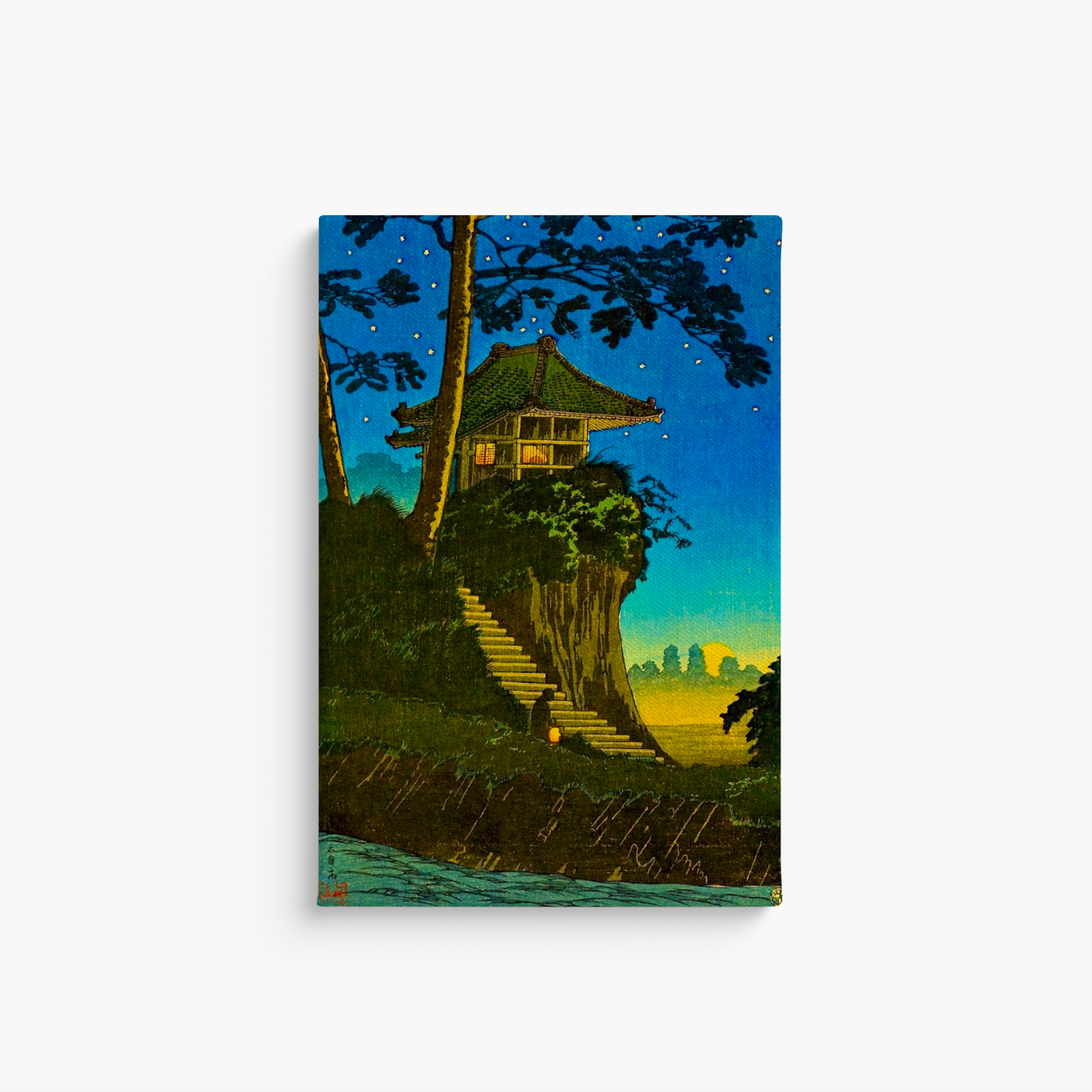 Image 2 of 4
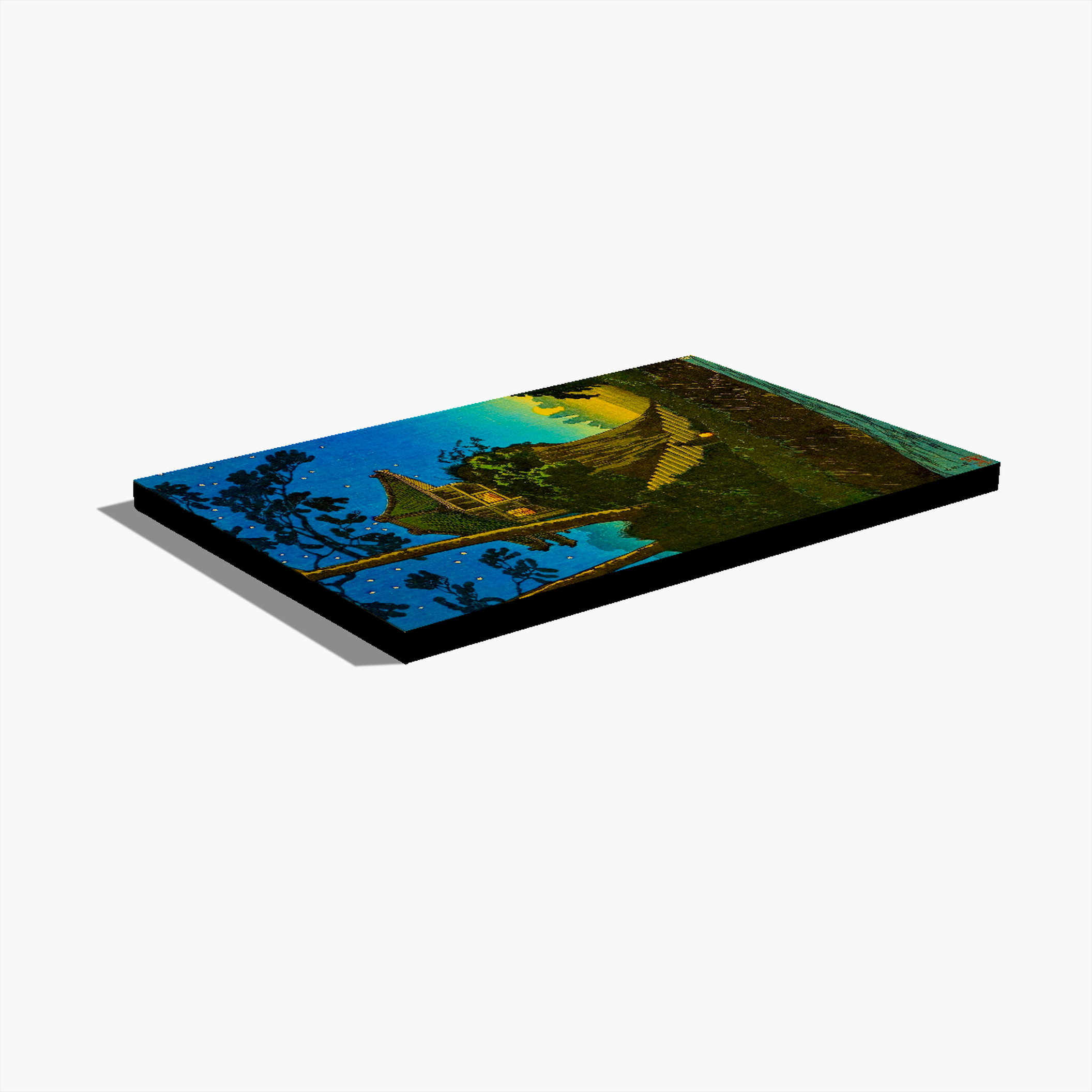 Image 3 of 4
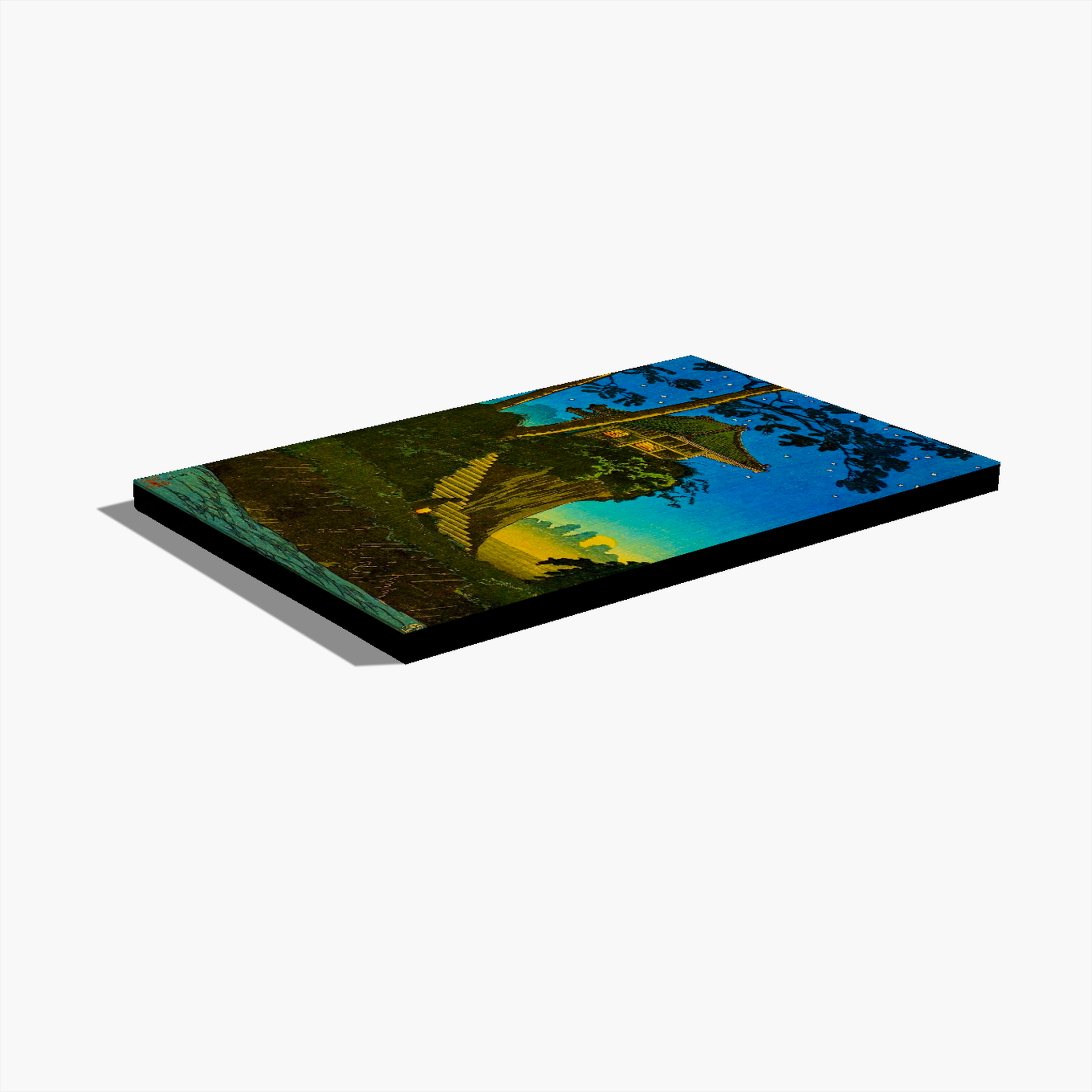 Image 4 of 4
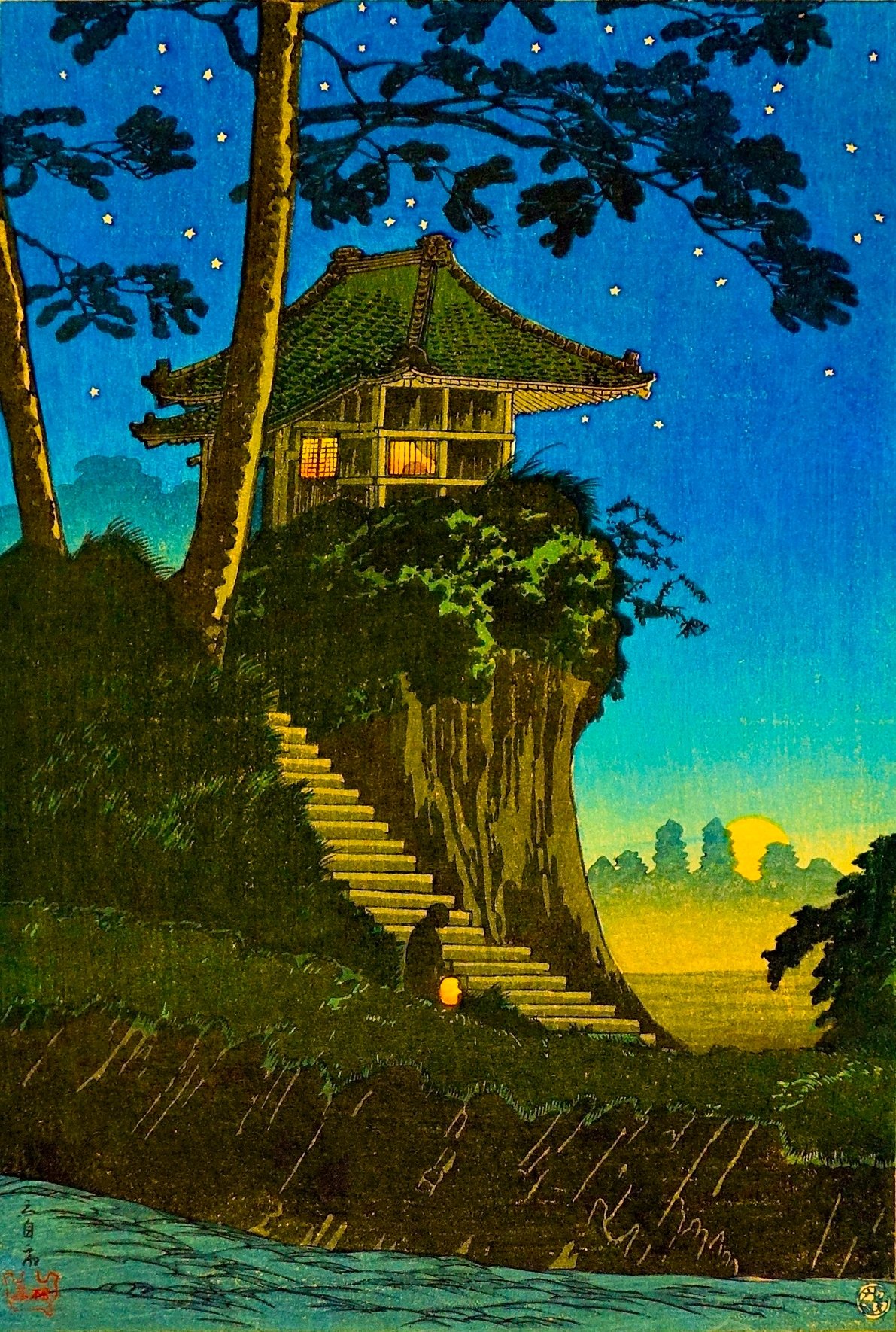
Shotei Takahashi’s “Moonrise at Tokumochi” 1922
Premium quality canvas print of Shotei Takahashi’s “Moonrise at Tokumochi” woodblock painting
Transform your living space into a peaceful haven with art that speaks to the soul. This canvas reprint evokes the quiet poetry of old Japan, filling your home with an atmosphere of serenity, mystery, and timeless beauty.
More About the Art:
Shotei Takahashi’s Moonrise at Tokumochi is a delicate and atmospheric vision of the Japanese landscape, rendered with the quiet lyricism that made Shotei one of the most beloved masters of early modern woodblock design. In this work, the rising moon becomes more than a celestial event: it becomes a source of mood, memory, and stillness. The print belongs to that distinctive world so often captured in Japanese printmaking, where nature, season, and human feeling are woven together in a single harmonious image.
The beauty of Moonrise at Tokumochi lies in its restraint. Shotei does not overwhelm the viewer with spectacle. Instead, he allows the scene to unfold gently, through balance, atmosphere, and suggestion. The moon ascends with silent dignity, casting its soft presence over the landscape below. The surrounding forms—whether trees, distant dwellings, water, or quiet pathways—are treated with simplicity and poetic clarity. As in many of Shotei’s finest compositions, the space seems suspended between observation and dream.
This quality of hush is central to the work’s appeal. The image invites the viewer into a moment of pause: a moment when the day has faded, the world has grown still, and the moon begins to illuminate the land with a calm, silvery light. There is something deeply meditative in this transition. Shotei captures not only a place, but also an hour, a climate of feeling, and a way of seeing the world that values subtle beauty over grandeur.
The subject also carries a broader resonance within Japanese art. Moonlit scenes have long held a special place in the visual and literary imagination of Japan, where the moon is associated with contemplation, transience, and seasonal awareness. In Moonrise at Tokumochi, that tradition is expressed with exceptional gentleness. The moon does not dominate the composition; rather, it gathers the scene into unity. Earth, sky, and atmosphere seem to answer one another in silence.
What makes this work especially compelling as a canvas print is its ability to bring tranquility into an interior space. Its subdued elegance and timeless mood make it ideal for a living room, bedroom, study, or hallway—anywhere one wishes to create an environment of calm reflection. As a reprint on canvas, Moonrise at Tokumochi offers not only the visual charm of traditional Japanese woodblock art, but also the emotional depth that has made such images enduringly cherished. It is a work of stillness, moonlight, and quiet wonder—an invitation to dwell, however briefly, in a more contemplative world.
More About the Artist:
Shotei Takahashi, also widely known as Hiroaki Takahashi, occupies a special place in the history of modern Japanese woodblock art. Though often mentioned alongside the great names of the Shin Hanga movement, Shotei developed a voice distinctly his own: intimate, lyrical, and immediately evocative. His prints are admired for their quiet charm, their graceful handling of atmosphere, and their ability to transform simple landscapes and familiar scenes into images of extraordinary feeling.
Born in Tokyo in 1871, Takahashi came of age during a period of profound transformation in Japan. The country was rapidly modernizing, and the old world of Edo-era visual culture was giving way to new artistic and commercial possibilities. Within this changing environment, he trained as an artist and eventually came to work in the field of woodblock design, where his sensitivity to everyday beauty would find its fullest expression.
Shotei became closely associated with the publisher Watanabe Shōzaburō, one of the most important figures in the development of modern Japanese prints for both domestic and international audiences. Watanabe recognized the appeal of images that preserved the elegance of traditional Japanese aesthetics while speaking to modern tastes, and Shotei proved particularly gifted in this regard. His designs often featured landscapes, shrines, rural villages, temple precincts, seasonal weather, bridges, boats, and moonlit scenes—subjects that allowed him to explore atmosphere with remarkable subtlety.
What distinguishes Shotei’s art is not grandeur, but intimacy. He was less concerned with theatrical drama than with the poetry of passing moments: evening snowfall over a village roof, rain drifting across a path, a temple gate in the fading light, a solitary figure beneath an umbrella, or the stillness of moonrise over a quiet landscape. His works are often modest in scale, yet within that modesty lies their power. They create emotional space. They invite silence. They remind the viewer that beauty often resides in fleeting, almost overlooked experiences.
This sensitivity places Shotei in close kinship with the broader ideals of Shin Hanga, even though his work also retains qualities that link it to earlier traditions and to the commercial print culture of the early twentieth century. Like the best Shin Hanga artists, he understood the expressive possibilities of atmosphere—mist, rain, twilight, and moonlight—and used them to shape emotional tone as much as visual form. His prints often appear simple at first glance, but the longer one looks, the more their quiet sophistication emerges.
Shotei’s career was not without hardship. The Great Kantō Earthquake of 1923 devastated Tokyo and had a major impact on the print world, destroying many blocks and designs. Yet his artistic legacy endured, and his prints continued to be appreciated for their gentle beauty and accessibility. In recent decades, collectors and admirers have increasingly recognized the unique appeal of his work: not only as decorative images, but as subtle works of art that preserve a distinctive vision of Japan.
Today, Shotei Takahashi is celebrated for his ability to capture the emotional essence of place with economy and grace. His landscapes do not merely record scenery; they translate it into mood. His moonlit scenes, in particular, reveal his gift for suggesting vast feeling through the lightest of means. In works such as Moonrise at Tokumochi, he offers the viewer something rare: a world in which quietness has meaning, where nature is experienced as presence rather than backdrop, and where art becomes an instrument of calm.
As a canvas print, Shotei’s work continues to speak beautifully to contemporary interiors and modern sensibilities. Its timeless atmosphere, refined simplicity, and contemplative spirit make it especially well suited to spaces that seek elegance without excess. To live with a Shotei print is to live with a certain kind of stillness—a stillness touched by moonlight, memory, and the enduring poetry of Japanese art.
Premium quality canvas print of Shotei Takahashi’s “Moonrise at Tokumochi” woodblock painting
Transform your living space into a peaceful haven with art that speaks to the soul. This canvas reprint evokes the quiet poetry of old Japan, filling your home with an atmosphere of serenity, mystery, and timeless beauty.
More About the Art:
Shotei Takahashi’s Moonrise at Tokumochi is a delicate and atmospheric vision of the Japanese landscape, rendered with the quiet lyricism that made Shotei one of the most beloved masters of early modern woodblock design. In this work, the rising moon becomes more than a celestial event: it becomes a source of mood, memory, and stillness. The print belongs to that distinctive world so often captured in Japanese printmaking, where nature, season, and human feeling are woven together in a single harmonious image.
The beauty of Moonrise at Tokumochi lies in its restraint. Shotei does not overwhelm the viewer with spectacle. Instead, he allows the scene to unfold gently, through balance, atmosphere, and suggestion. The moon ascends with silent dignity, casting its soft presence over the landscape below. The surrounding forms—whether trees, distant dwellings, water, or quiet pathways—are treated with simplicity and poetic clarity. As in many of Shotei’s finest compositions, the space seems suspended between observation and dream.
This quality of hush is central to the work’s appeal. The image invites the viewer into a moment of pause: a moment when the day has faded, the world has grown still, and the moon begins to illuminate the land with a calm, silvery light. There is something deeply meditative in this transition. Shotei captures not only a place, but also an hour, a climate of feeling, and a way of seeing the world that values subtle beauty over grandeur.
The subject also carries a broader resonance within Japanese art. Moonlit scenes have long held a special place in the visual and literary imagination of Japan, where the moon is associated with contemplation, transience, and seasonal awareness. In Moonrise at Tokumochi, that tradition is expressed with exceptional gentleness. The moon does not dominate the composition; rather, it gathers the scene into unity. Earth, sky, and atmosphere seem to answer one another in silence.
What makes this work especially compelling as a canvas print is its ability to bring tranquility into an interior space. Its subdued elegance and timeless mood make it ideal for a living room, bedroom, study, or hallway—anywhere one wishes to create an environment of calm reflection. As a reprint on canvas, Moonrise at Tokumochi offers not only the visual charm of traditional Japanese woodblock art, but also the emotional depth that has made such images enduringly cherished. It is a work of stillness, moonlight, and quiet wonder—an invitation to dwell, however briefly, in a more contemplative world.
More About the Artist:
Shotei Takahashi, also widely known as Hiroaki Takahashi, occupies a special place in the history of modern Japanese woodblock art. Though often mentioned alongside the great names of the Shin Hanga movement, Shotei developed a voice distinctly his own: intimate, lyrical, and immediately evocative. His prints are admired for their quiet charm, their graceful handling of atmosphere, and their ability to transform simple landscapes and familiar scenes into images of extraordinary feeling.
Born in Tokyo in 1871, Takahashi came of age during a period of profound transformation in Japan. The country was rapidly modernizing, and the old world of Edo-era visual culture was giving way to new artistic and commercial possibilities. Within this changing environment, he trained as an artist and eventually came to work in the field of woodblock design, where his sensitivity to everyday beauty would find its fullest expression.
Shotei became closely associated with the publisher Watanabe Shōzaburō, one of the most important figures in the development of modern Japanese prints for both domestic and international audiences. Watanabe recognized the appeal of images that preserved the elegance of traditional Japanese aesthetics while speaking to modern tastes, and Shotei proved particularly gifted in this regard. His designs often featured landscapes, shrines, rural villages, temple precincts, seasonal weather, bridges, boats, and moonlit scenes—subjects that allowed him to explore atmosphere with remarkable subtlety.
What distinguishes Shotei’s art is not grandeur, but intimacy. He was less concerned with theatrical drama than with the poetry of passing moments: evening snowfall over a village roof, rain drifting across a path, a temple gate in the fading light, a solitary figure beneath an umbrella, or the stillness of moonrise over a quiet landscape. His works are often modest in scale, yet within that modesty lies their power. They create emotional space. They invite silence. They remind the viewer that beauty often resides in fleeting, almost overlooked experiences.
This sensitivity places Shotei in close kinship with the broader ideals of Shin Hanga, even though his work also retains qualities that link it to earlier traditions and to the commercial print culture of the early twentieth century. Like the best Shin Hanga artists, he understood the expressive possibilities of atmosphere—mist, rain, twilight, and moonlight—and used them to shape emotional tone as much as visual form. His prints often appear simple at first glance, but the longer one looks, the more their quiet sophistication emerges.
Shotei’s career was not without hardship. The Great Kantō Earthquake of 1923 devastated Tokyo and had a major impact on the print world, destroying many blocks and designs. Yet his artistic legacy endured, and his prints continued to be appreciated for their gentle beauty and accessibility. In recent decades, collectors and admirers have increasingly recognized the unique appeal of his work: not only as decorative images, but as subtle works of art that preserve a distinctive vision of Japan.
Today, Shotei Takahashi is celebrated for his ability to capture the emotional essence of place with economy and grace. His landscapes do not merely record scenery; they translate it into mood. His moonlit scenes, in particular, reveal his gift for suggesting vast feeling through the lightest of means. In works such as Moonrise at Tokumochi, he offers the viewer something rare: a world in which quietness has meaning, where nature is experienced as presence rather than backdrop, and where art becomes an instrument of calm.
As a canvas print, Shotei’s work continues to speak beautifully to contemporary interiors and modern sensibilities. Its timeless atmosphere, refined simplicity, and contemplative spirit make it especially well suited to spaces that seek elegance without excess. To live with a Shotei print is to live with a certain kind of stillness—a stillness touched by moonlight, memory, and the enduring poetry of Japanese art.