
 Image 1 of 4
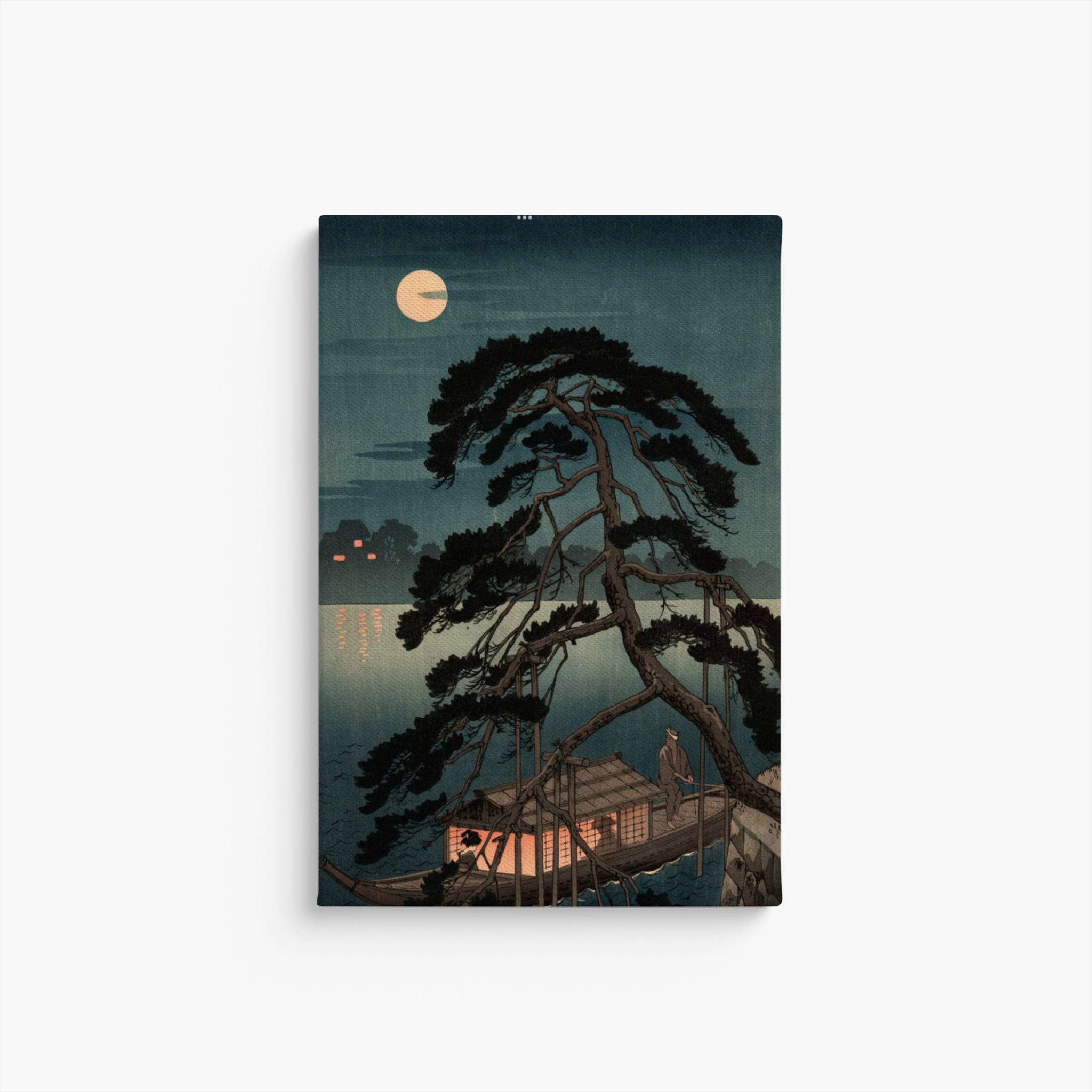 Image 2 of 4
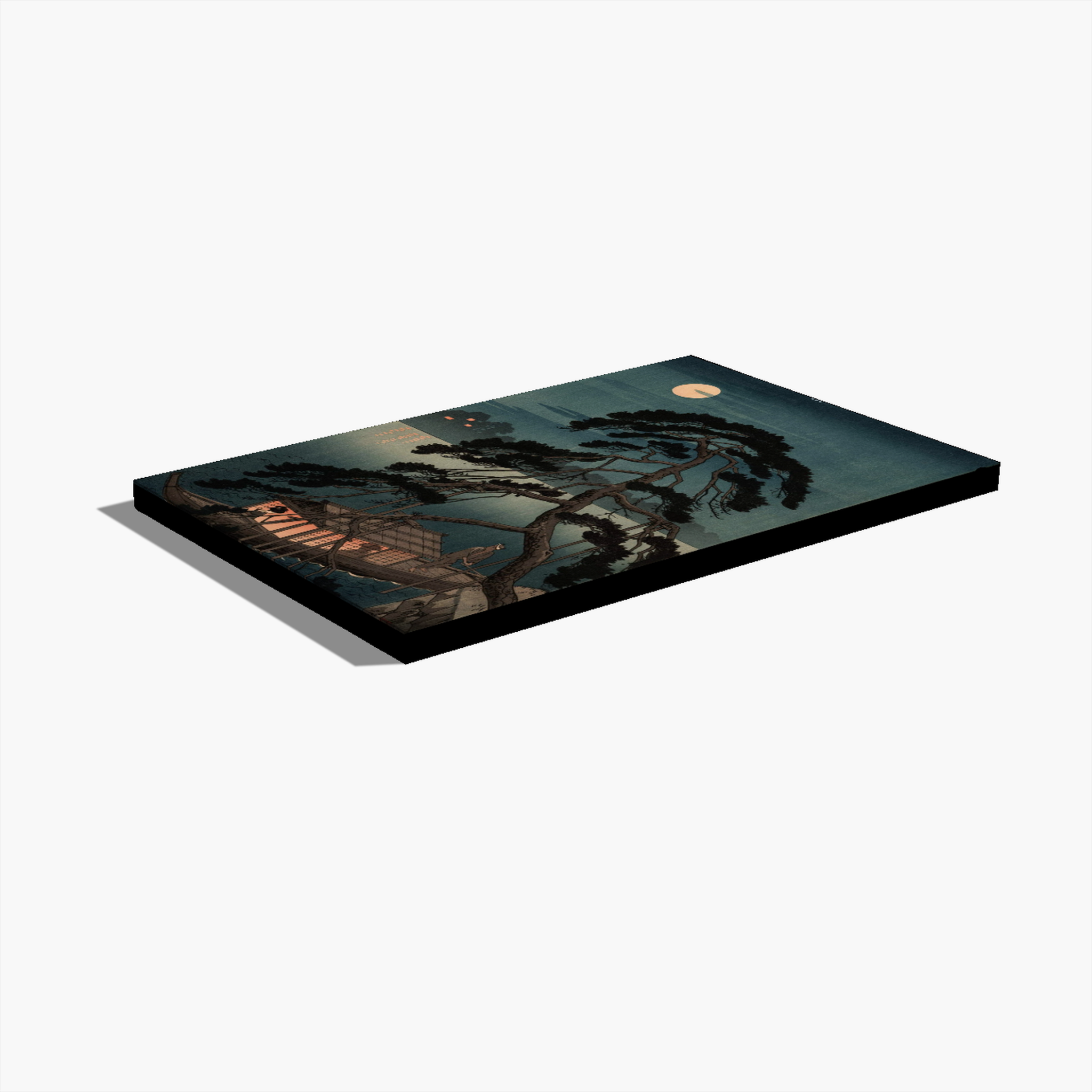 Image 3 of 4
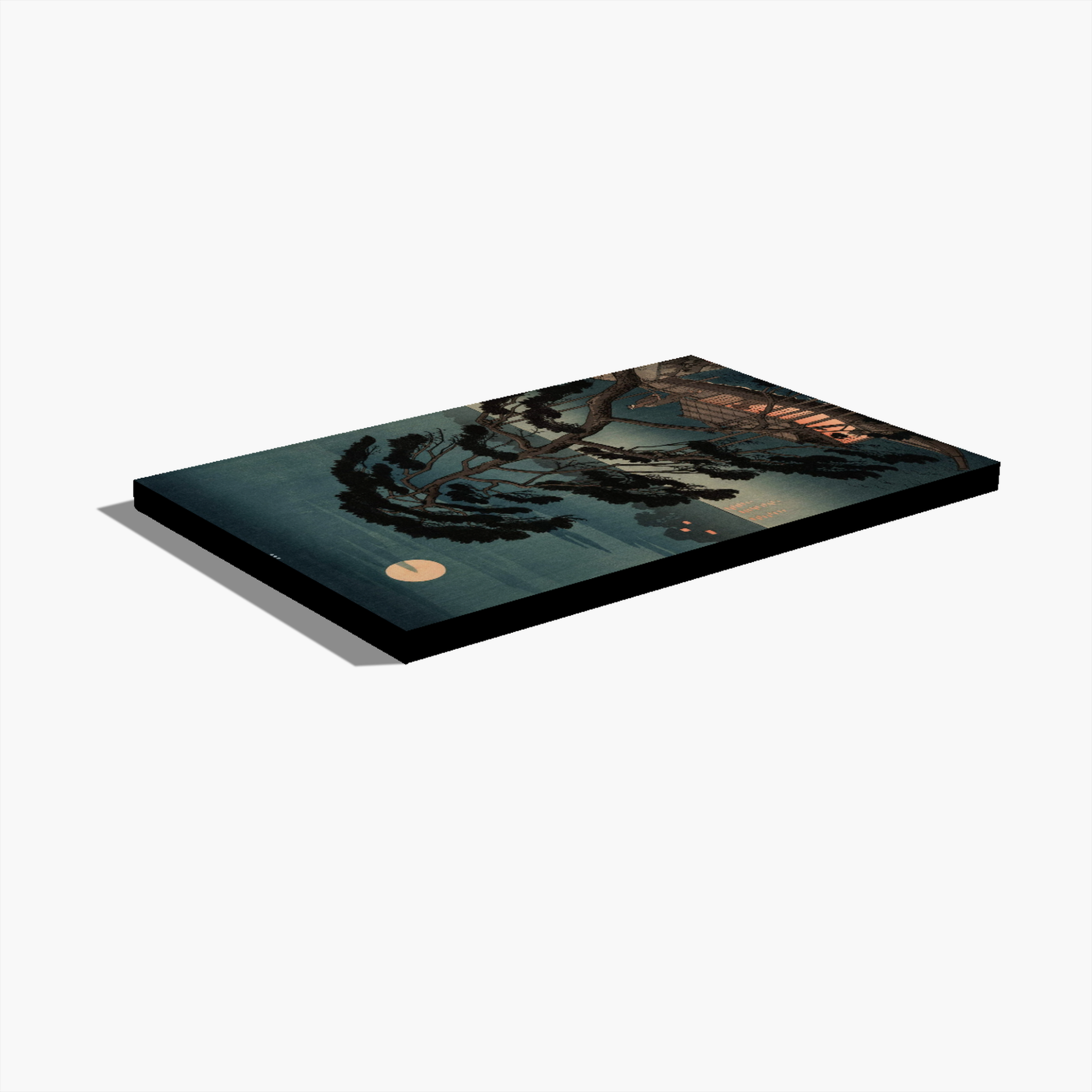 Image 4 of 4
Shoda Koho’s “Moonlit Pine and Pleasure Boat”
Premium quality canvas reproduction of Shoda Koho’s “Moonlit Pine and Pleasure Boat”
Bring moonlit water and warm cabin light into your space. In Shoda Koho’s Moonlit Pine and Pleasure Boat, a sculptural pine stretches above an illuminated boat, with distant windows glowing across the water. Reproduced on canvas over a sturdy 1.5-inch wood stretcher, the scene combines rich blue-green colour with an inviting sense of evening stillness.
Product details: Canvas reproduction over a sturdy 1.5-inch wood stretcher. Available in 16 × 24 in. ($259 CAD) and 24 × 36 in. ($299 CAD). No returns accepted.
More About the Art:
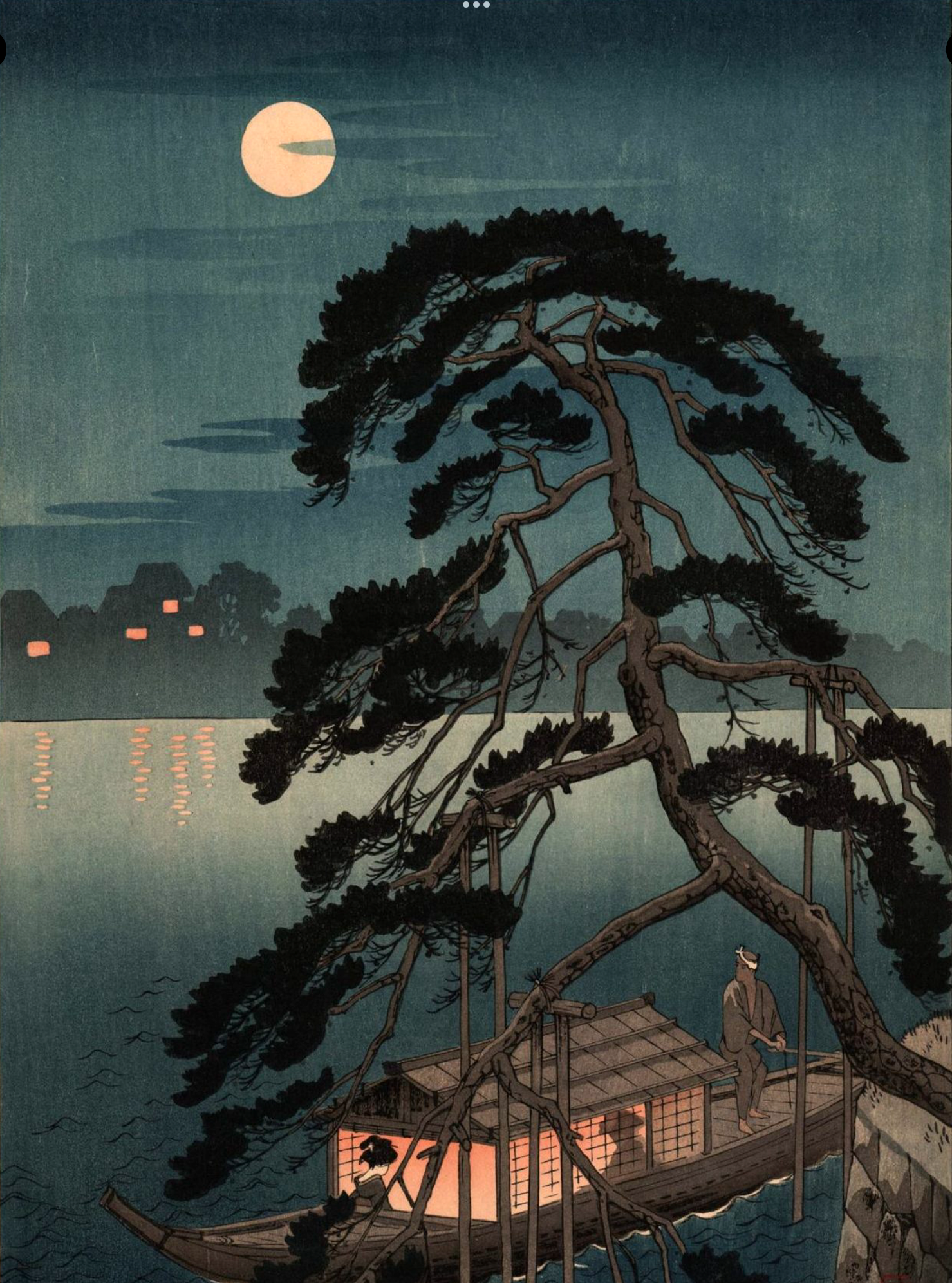
A large pine gives Moonlit Pine and Pleasure Boat its distinctive shape. Rising from the right edge, the trunk bends inward before sending long branches across the scene. Dark clusters of needles gather along those branches, while bare sections reveal the tree’s uneven structure. The close view makes the bark, branching joints and fine hanging twigs part of the picture’s appeal, with the water visible through the open spaces between them.
Above the pine, a pale golden moon hangs in the upper left. Soft horizontal cloud bands interrupt the surrounding blue-green sky, and one tapered strip passes across the moon itself. Its rounded brightness contrasts with the angular branches below. The broad area of sky gives this upper part of the composition a feeling of openness before the eye moves into the more detailed foreground.
Across the water, a distant line of buildings appears in muted silhouettes. Small orange windows punctuate the darker shapes, and their reflections descend in short, broken marks. A pale band of water separates this far shore from the pine. These modest points of light make the distance feel inhabited, while their repeated shapes bring a gentle rhythm to an otherwise quiet stretch of water.
The covered boat occupies the lower part of the view. Its curved hull, sloping cabin roof and gridded window panels are drawn with clear lines that contrast with the irregular growth of the tree. Warm orange light fills the cabin, making it the brightest substantial area near the foreground. That glow connects visually with the distant windows, carrying warmth from one side of the water to the other.
Figures on board add scale and a sense of everyday activity. A figure near the left end is partly screened by branches, while a standing boatman appears beside the cabin toward the right. The boat sits close to a stone edge that enters along the side of the image. Small ripples below it suggest a gently moving surface, without disturbing the steady arrangement of tree, shore and sky.
The portrait composition rewards looking in stages. The moon draws attention upward; the pine’s descending branches lead it back toward the illuminated cabin. At close range, the needle clusters, window lattice, roof lines and reflected lights each have a different texture. From farther away, they settle into a few strong shapes: the curved tree, the broad water and the warm boat beneath them.
The Los Angeles County Museum of Art holds the same design under the title A Ferry Boat, crediting Shōda Kōhō and dating the colour woodblock print to the early twentieth century. UnitedArts retains the title Moonlit Pine and Pleasure Boat for this canvas reproduction. That historical period describes the original design’s context; it does not assign a printing date or edition to the source image or the new canvas.
Displayed in a room, the cool blue-green setting and warm orange accents can create a calm, welcoming focal point. The pine’s strong outline remains legible across a space, while the cabin and distant lights invite a closer view. Canvas over a 1.5-inch wood stretcher gives the image physical depth, allowing this layered evening scene to hold its own beside simple furnishings, natural wood or soft neutral walls.
More About the Artist:
Shoda Koho was a Japanese artist active during the Meiji and Taishō periods, with a practice that included painting, illustration and poetry. His name appears in museum catalogues as Shōda Kōhō. Colour woodblock prints preserved under his name show a varied approach to nighttime subjects, from intimate, narrow views to broader scenes containing trees, water and figures. They offer a way to encounter his work through the images themselves.
Japanese biographical dictionaries record his training with Ogata Gekkō, under whom he studied figure painting. They also identify genre scenes as a particular area of his work. Exhibition recognition followed, including awards at Japanese painting exhibitions in 1895 and 1897. These details place him within the active painting culture of his period and establish a background broader than the single night scene presented here.
Illustration and poetry were also part of that background. Alongside making images, he wrote kyōka verse under a separate literary name. These different activities provide a useful reminder that an artist’s practice can move between words and pictures. In looking at his prints today, we can appreciate both the overall scene and the small descriptive touches that give a figure, branch or patch of light its presence.
One direct point of reference is the Los Angeles County Museum of Art’s A Ferry Boat, the composition offered here as Moonlit Pine and Pleasure Boat. The museum identifies it as a Japanese colour woodblock print from the early twentieth century. Its combination of a close, prominent tree and a more distant waterside view gives the eye several levels to explore, while the illuminated boat introduces a concentrated area of warmth.
Other works reveal his use of different formats and subjects. The Smithsonian’s National Museum of Asian Art holds Lantern and Moon and Cat at Night, both woodblock prints in ink and colour on paper. Their very narrow vertical proportions offer a different viewing experience from the wider boat scene. Seen together, these records show that his night imagery could accommodate a small subject or a more expansive setting, using the shape of the picture as part of its effect.
Understanding the historical medium adds another dimension to these works. Traditional Japanese colour woodblock production brought together the skills of a designer, carver, printer and publisher. A drawing was translated into carved surfaces, with separate blocks used to print different colours in alignment. The Metropolitan Museum of Art’s account of this process helps explain how detailed lines and broad coloured areas could coexist within one image. This context concerns the historical prints; the UnitedArts product is a canvas reproduction.
His nighttime subjects also sit within a wider interest in light and atmosphere in modern Japanese prints. The Smithsonian’s exhibition The Quality of Light examines how changing illumination could establish the mood of a place. In Moonlit Pine and Pleasure Boat, the effect can be read directly in the image: dark foliage gives the pale moon definition, and the orange cabin makes the surrounding water feel cooler and more spacious.
For a present-day viewer, the appeal lies partly in that balance of description and suggestion. We can follow the cabin’s lattice, the bend of a branch or a row of reflected windows, yet the whole view retains an unhurried feeling. Shoda Koho’s scene makes room for both kinds of attention. Its large shapes create an immediate impression, while the smaller relationships between figures, tree and light keep offering reasons to look again.
Sources
Los Angeles County Museum of Art — A Ferry Boat, early twentieth century
Japanese biographical dictionaries — Shōda Kōhō, via Kotobank
Smithsonian National Museum of Asian Art — Lantern and Moon, S2003.8.3826
Smithsonian National Museum of Asian Art — Cat at Night, S2003.8.2240
The Metropolitan Museum of Art — Woodblock Prints in the Ukiyo-e Style
Smithsonian National Museum of Asian Art — The Quality of Light
Premium quality canvas reproduction of Shoda Koho’s “Moonlit Pine and Pleasure Boat”
Bring moonlit water and warm cabin light into your space. In Shoda Koho’s Moonlit Pine and Pleasure Boat, a sculptural pine stretches above an illuminated boat, with distant windows glowing across the water. Reproduced on canvas over a sturdy 1.5-inch wood stretcher, the scene combines rich blue-green colour with an inviting sense of evening stillness.
Product details: Canvas reproduction over a sturdy 1.5-inch wood stretcher. Available in 16 × 24 in. ($259 CAD) and 24 × 36 in. ($299 CAD). No returns accepted.
More About the Art:
A large pine gives Moonlit Pine and Pleasure Boat its distinctive shape. Rising from the right edge, the trunk bends inward before sending long branches across the scene. Dark clusters of needles gather along those branches, while bare sections reveal the tree’s uneven structure. The close view makes the bark, branching joints and fine hanging twigs part of the picture’s appeal, with the water visible through the open spaces between them.
Above the pine, a pale golden moon hangs in the upper left. Soft horizontal cloud bands interrupt the surrounding blue-green sky, and one tapered strip passes across the moon itself. Its rounded brightness contrasts with the angular branches below. The broad area of sky gives this upper part of the composition a feeling of openness before the eye moves into the more detailed foreground.
Across the water, a distant line of buildings appears in muted silhouettes. Small orange windows punctuate the darker shapes, and their reflections descend in short, broken marks. A pale band of water separates this far shore from the pine. These modest points of light make the distance feel inhabited, while their repeated shapes bring a gentle rhythm to an otherwise quiet stretch of water.
The covered boat occupies the lower part of the view. Its curved hull, sloping cabin roof and gridded window panels are drawn with clear lines that contrast with the irregular growth of the tree. Warm orange light fills the cabin, making it the brightest substantial area near the foreground. That glow connects visually with the distant windows, carrying warmth from one side of the water to the other.
Figures on board add scale and a sense of everyday activity. A figure near the left end is partly screened by branches, while a standing boatman appears beside the cabin toward the right. The boat sits close to a stone edge that enters along the side of the image. Small ripples below it suggest a gently moving surface, without disturbing the steady arrangement of tree, shore and sky.
The portrait composition rewards looking in stages. The moon draws attention upward; the pine’s descending branches lead it back toward the illuminated cabin. At close range, the needle clusters, window lattice, roof lines and reflected lights each have a different texture. From farther away, they settle into a few strong shapes: the curved tree, the broad water and the warm boat beneath them.
The Los Angeles County Museum of Art holds the same design under the title A Ferry Boat, crediting Shōda Kōhō and dating the colour woodblock print to the early twentieth century. UnitedArts retains the title Moonlit Pine and Pleasure Boat for this canvas reproduction. That historical period describes the original design’s context; it does not assign a printing date or edition to the source image or the new canvas.
Displayed in a room, the cool blue-green setting and warm orange accents can create a calm, welcoming focal point. The pine’s strong outline remains legible across a space, while the cabin and distant lights invite a closer view. Canvas over a 1.5-inch wood stretcher gives the image physical depth, allowing this layered evening scene to hold its own beside simple furnishings, natural wood or soft neutral walls.
More About the Artist:
Shoda Koho was a Japanese artist active during the Meiji and Taishō periods, with a practice that included painting, illustration and poetry. His name appears in museum catalogues as Shōda Kōhō. Colour woodblock prints preserved under his name show a varied approach to nighttime subjects, from intimate, narrow views to broader scenes containing trees, water and figures. They offer a way to encounter his work through the images themselves.
Japanese biographical dictionaries record his training with Ogata Gekkō, under whom he studied figure painting. They also identify genre scenes as a particular area of his work. Exhibition recognition followed, including awards at Japanese painting exhibitions in 1895 and 1897. These details place him within the active painting culture of his period and establish a background broader than the single night scene presented here.
Illustration and poetry were also part of that background. Alongside making images, he wrote kyōka verse under a separate literary name. These different activities provide a useful reminder that an artist’s practice can move between words and pictures. In looking at his prints today, we can appreciate both the overall scene and the small descriptive touches that give a figure, branch or patch of light its presence.
One direct point of reference is the Los Angeles County Museum of Art’s A Ferry Boat, the composition offered here as Moonlit Pine and Pleasure Boat. The museum identifies it as a Japanese colour woodblock print from the early twentieth century. Its combination of a close, prominent tree and a more distant waterside view gives the eye several levels to explore, while the illuminated boat introduces a concentrated area of warmth.
Other works reveal his use of different formats and subjects. The Smithsonian’s National Museum of Asian Art holds Lantern and Moon and Cat at Night, both woodblock prints in ink and colour on paper. Their very narrow vertical proportions offer a different viewing experience from the wider boat scene. Seen together, these records show that his night imagery could accommodate a small subject or a more expansive setting, using the shape of the picture as part of its effect.
Understanding the historical medium adds another dimension to these works. Traditional Japanese colour woodblock production brought together the skills of a designer, carver, printer and publisher. A drawing was translated into carved surfaces, with separate blocks used to print different colours in alignment. The Metropolitan Museum of Art’s account of this process helps explain how detailed lines and broad coloured areas could coexist within one image. This context concerns the historical prints; the UnitedArts product is a canvas reproduction.
His nighttime subjects also sit within a wider interest in light and atmosphere in modern Japanese prints. The Smithsonian’s exhibition The Quality of Light examines how changing illumination could establish the mood of a place. In Moonlit Pine and Pleasure Boat, the effect can be read directly in the image: dark foliage gives the pale moon definition, and the orange cabin makes the surrounding water feel cooler and more spacious.
For a present-day viewer, the appeal lies partly in that balance of description and suggestion. We can follow the cabin’s lattice, the bend of a branch or a row of reflected windows, yet the whole view retains an unhurried feeling. Shoda Koho’s scene makes room for both kinds of attention. Its large shapes create an immediate impression, while the smaller relationships between figures, tree and light keep offering reasons to look again.
Sources
Los Angeles County Museum of Art — A Ferry Boat, early twentieth century
Japanese biographical dictionaries — Shōda Kōhō, via Kotobank
Smithsonian National Museum of Asian Art — Lantern and Moon, S2003.8.3826
Smithsonian National Museum of Asian Art — Cat at Night, S2003.8.2240
The Metropolitan Museum of Art — Woodblock Prints in the Ukiyo-e Style
Smithsonian National Museum of Asian Art — The Quality of Light