
 Image 1 of 1
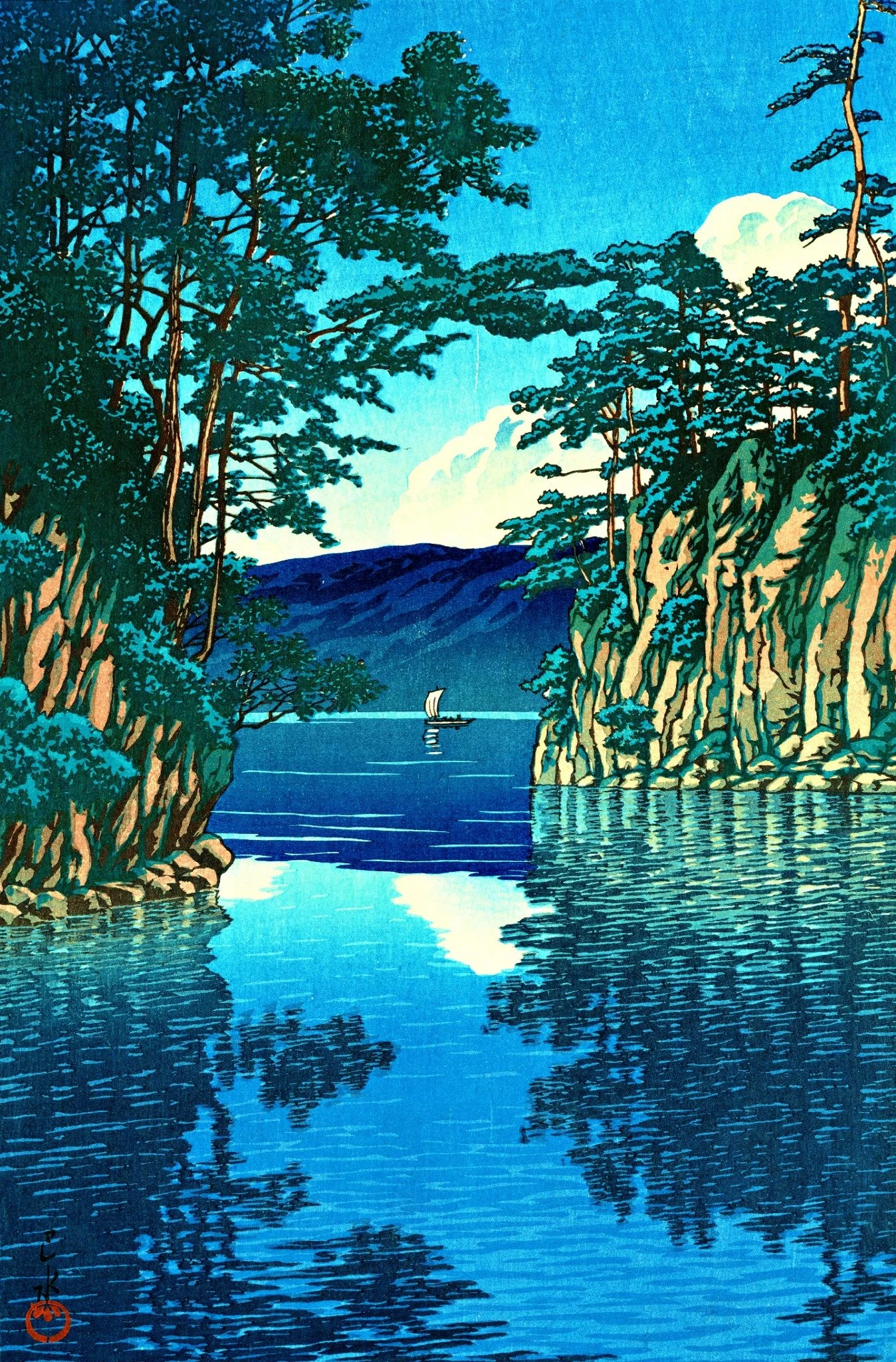
A canvas reproduction of Lake Towada (Towada-ko, 十和田湖), a Japanese colour woodblock print designed by Kawase Hasui around 1927. Pine-covered cliffs frame clear blue water, distant mountains and a small white-sailed boat.
Canvas details
Printed on textured canvas with fade-resistant latex inks, stretched over a 1.5-inch wooden frame and supplied with built-in hangers, ready to hang.
8 × 12 inches — $110 CAD
12 × 16 inches — $169 CAD
16 × 24 inches — $259 CAD
24 × 36 inches — $299 CAD
Free shipping throughout Canada and the continental United States. All sales are final; returns are not accepted.
Dark pines reach across a bright sky from rocky banks on either side of the lake. Their angular branches and dense foliage make a natural frame around the distant blue mountains, while a single white sail gives the expansive scene an intimate human scale.
The lake is the centre of the composition. Broken lines of turquoise and deep blue suggest small ripples, carrying reflections of the cliffs, trees and pale clouds down through the foreground. Warm ochre stone stands against the cool water, giving the landscape both clarity and depth.
The original design is associated with Hasui’s New Eight Views of Japan and was published by Bijutsusha. Its vertical arrangement draws the eye from the reflected sky towards the distant boat, creating a quiet focal point for a living room, bedroom or study.
Kawase Hasui (1883–1957) was a Japanese print designer and a leading artist of the shin-hanga, or “new prints”, movement. He is known for landscapes and townscapes that explore changing weather, seasons and the effects of light.
Hasui developed many of his designs from sketches made during journeys around Japan. Working with skilled woodblock carvers and printers, he combined clear outlines with subtle colour gradations and carefully observed atmosphere. His prints are held in major museum collections, including the British Museum and the Art Institute of Chicago.