

 Image 1 of 5
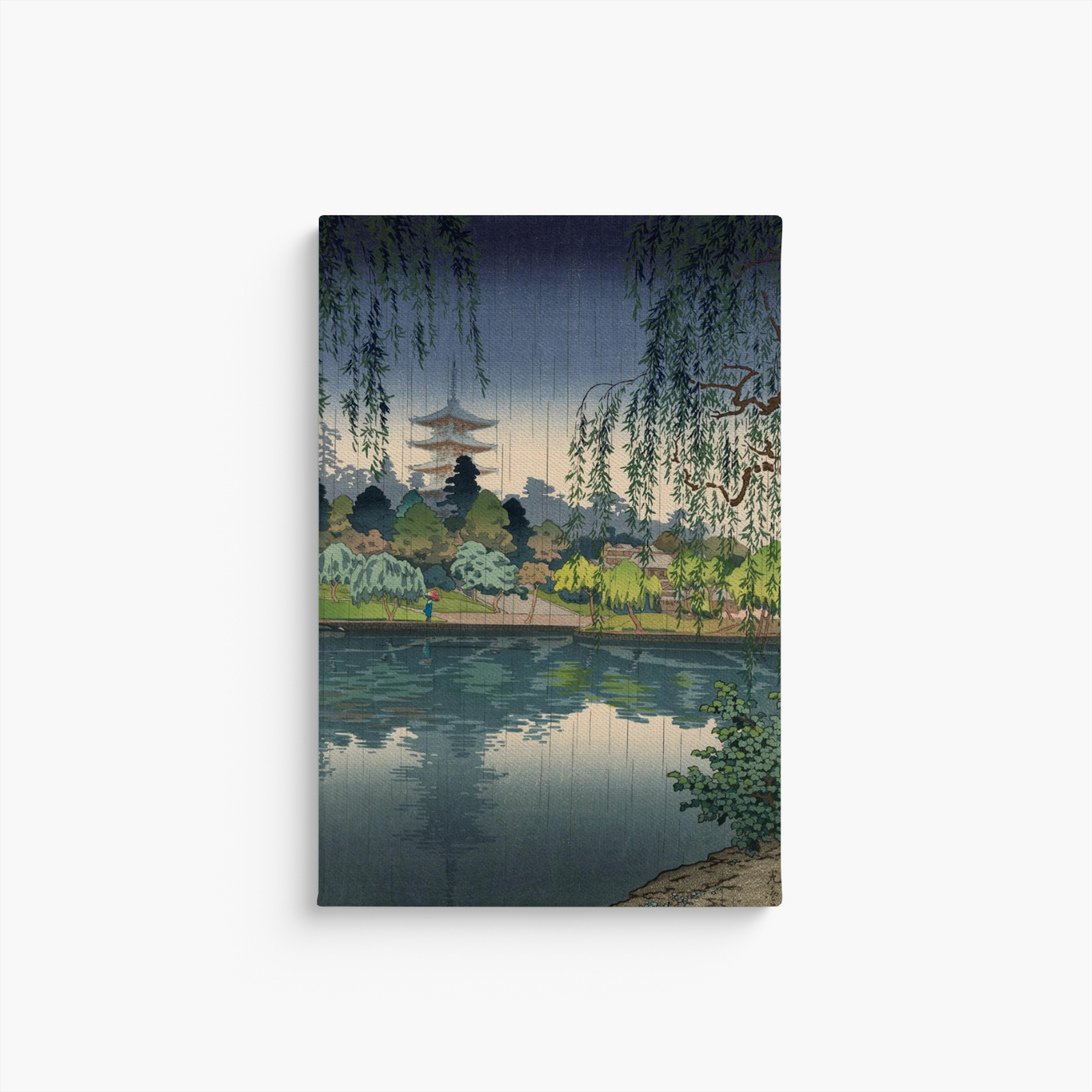 Image 2 of 5
 Image 3 of 5
 Image 4 of 5
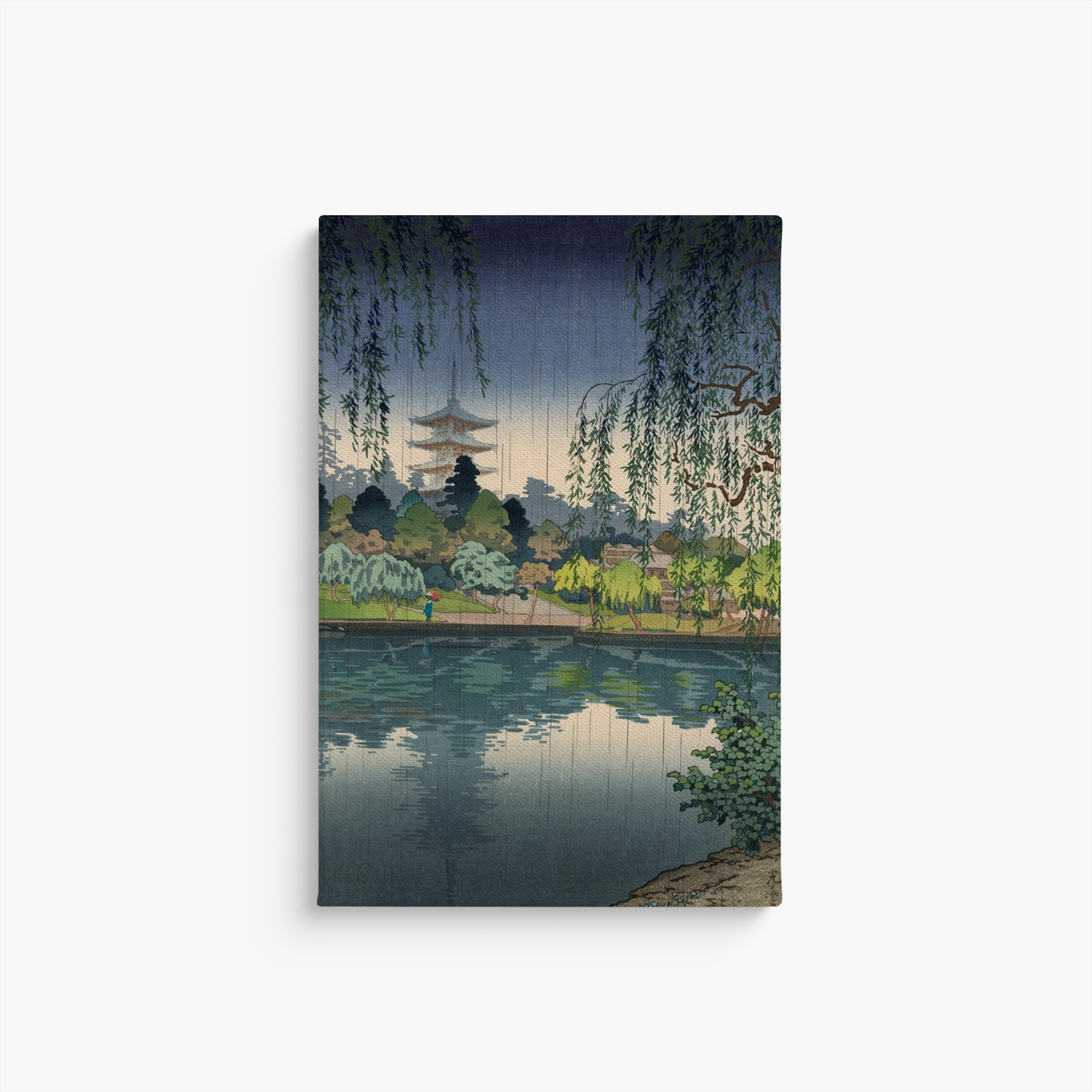 Image 5 of 5
Premium quality canvas print of Koitsu Tsuchiya’s “Kofukuji Temple in Nara” woodblock painting
Transform your living space into a peaceful haven with art that speaks to the soul. This canvas reprint evokes the timeless beauty of old Japan, filling your home with an atmosphere of stillness, reverence, and quiet wonder.
More About the Art:
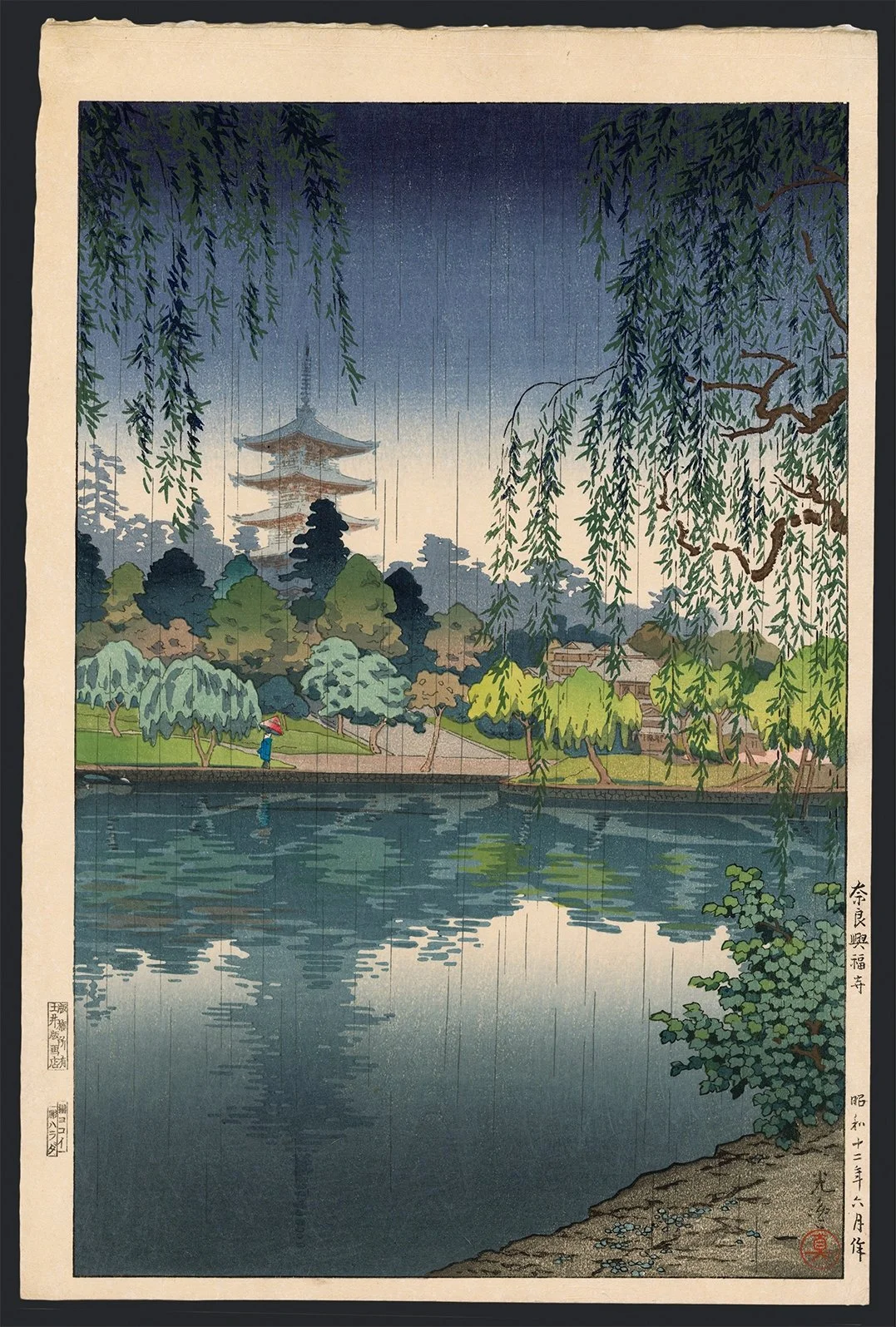
Koitsu Tsuchiya’s “Kofukuji Temple in Nara” is a graceful vision of one of Japan’s most treasured sacred landmarks, rendered with the luminous sensitivity that made Koitsu one of the great masters of the Shin Hanga movement. Created in 1937, the print captures Kofukuji not merely as an architectural subject, but as a place of memory, devotion, and poetic silence.
In this work, Koitsu presents the temple with remarkable atmospheric restraint. The towering pagoda rises with solemn elegance, its tiered silhouette standing against the muted tones of the sky. The surrounding trees, temple grounds, and delicate shadows soften the grandeur of the structure, allowing the viewer to feel not only its physical presence, but its spiritual weight. Koitsu’s genius lies in this balance: the scene is monumental, yet intimate; historic, yet deeply personal.
Kofukuji Temple occupies a special place in the cultural heart of Nara. Originally associated with the powerful Fujiwara clan, it became one of the great temples of the ancient capital and remains one of Nara’s most recognizable symbols. Its five-storied pagoda, first erected in 730 and rebuilt in its present form in 1426, is celebrated as one of Japan’s tallest wooden pagodas and a defining landmark of the city.
This history gives Koitsu’s image a profound resonance. The temple is not shown as a crowded destination or a documentary record, but as a living presence shaped by centuries of faith, craftsmanship, fire, renewal, and endurance. The pagoda seems to emerge from time itself, standing quietly between earth and sky, between human devotion and the passing seasons.
What makes “Kofukuji Temple in Nara” so compelling is its serenity. There is no dramatic action, no overt narrative, no excess of ornament. Instead, Koitsu allows silence to speak. The composition invites contemplation, drawing the viewer into a world where architecture, nature, and history exist in perfect harmony. In the refined language of Shin Hanga, he transforms a famous temple scene into a meditation on permanence, beauty, and the sacred stillness of Japan’s ancient capital.
More About the Artist:
Koitsu Tsuchiya’s prints preserve, with quiet brilliance, the lyrical beauty of Japan’s landscapes. Through delicate modulations of light and shadow, he infused his scenes with a spellbinding atmosphere, transforming familiar vistas into visions of poetic stillness.
Born in 1870 near Hamamatsu, Koitsu was given the name Koichi. At the age of fifteen, he moved to Tokyo to study woodblock printing under Matsuzaki, a carver associated with the ukiyo-e master Kiyochika Kobayashi. Before long, however, he left Matsuzaki’s tutelage and became a direct pupil of Kiyochika himself. For nineteen years, Koitsu lived in Kiyochika’s household, devoting himself to the study and practice of Japanese woodblock printing.
His earliest prints depicted scenes from the Sino-Japanese War of 1894–95, and he later worked for a time as a lithographer. In 1931, a fortuitous meeting with the publisher Watanabe marked a decisive turning point in his artistic life. From that moment onward, Koitsu Tsuchiya dedicated himself to the creation of Japanese landscape prints in the Shin Hanga style, producing works celebrated for their serenity, refinement, and luminous beauty.
Premium quality canvas print of Koitsu Tsuchiya’s “Kofukuji Temple in Nara” woodblock painting
Transform your living space into a peaceful haven with art that speaks to the soul. This canvas reprint evokes the timeless beauty of old Japan, filling your home with an atmosphere of stillness, reverence, and quiet wonder.
More About the Art:
Koitsu Tsuchiya’s “Kofukuji Temple in Nara” is a graceful vision of one of Japan’s most treasured sacred landmarks, rendered with the luminous sensitivity that made Koitsu one of the great masters of the Shin Hanga movement. Created in 1937, the print captures Kofukuji not merely as an architectural subject, but as a place of memory, devotion, and poetic silence.
In this work, Koitsu presents the temple with remarkable atmospheric restraint. The towering pagoda rises with solemn elegance, its tiered silhouette standing against the muted tones of the sky. The surrounding trees, temple grounds, and delicate shadows soften the grandeur of the structure, allowing the viewer to feel not only its physical presence, but its spiritual weight. Koitsu’s genius lies in this balance: the scene is monumental, yet intimate; historic, yet deeply personal.
Kofukuji Temple occupies a special place in the cultural heart of Nara. Originally associated with the powerful Fujiwara clan, it became one of the great temples of the ancient capital and remains one of Nara’s most recognizable symbols. Its five-storied pagoda, first erected in 730 and rebuilt in its present form in 1426, is celebrated as one of Japan’s tallest wooden pagodas and a defining landmark of the city.
This history gives Koitsu’s image a profound resonance. The temple is not shown as a crowded destination or a documentary record, but as a living presence shaped by centuries of faith, craftsmanship, fire, renewal, and endurance. The pagoda seems to emerge from time itself, standing quietly between earth and sky, between human devotion and the passing seasons.
What makes “Kofukuji Temple in Nara” so compelling is its serenity. There is no dramatic action, no overt narrative, no excess of ornament. Instead, Koitsu allows silence to speak. The composition invites contemplation, drawing the viewer into a world where architecture, nature, and history exist in perfect harmony. In the refined language of Shin Hanga, he transforms a famous temple scene into a meditation on permanence, beauty, and the sacred stillness of Japan’s ancient capital.
More About the Artist:
Koitsu Tsuchiya’s prints preserve, with quiet brilliance, the lyrical beauty of Japan’s landscapes. Through delicate modulations of light and shadow, he infused his scenes with a spellbinding atmosphere, transforming familiar vistas into visions of poetic stillness.
Born in 1870 near Hamamatsu, Koitsu was given the name Koichi. At the age of fifteen, he moved to Tokyo to study woodblock printing under Matsuzaki, a carver associated with the ukiyo-e master Kiyochika Kobayashi. Before long, however, he left Matsuzaki’s tutelage and became a direct pupil of Kiyochika himself. For nineteen years, Koitsu lived in Kiyochika’s household, devoting himself to the study and practice of Japanese woodblock printing.
His earliest prints depicted scenes from the Sino-Japanese War of 1894–95, and he later worked for a time as a lithographer. In 1931, a fortuitous meeting with the publisher Watanabe marked a decisive turning point in his artistic life. From that moment onward, Koitsu Tsuchiya dedicated himself to the creation of Japanese landscape prints in the Shin Hanga style, producing works celebrated for their serenity, refinement, and luminous beauty.