
 Image 1 of 4
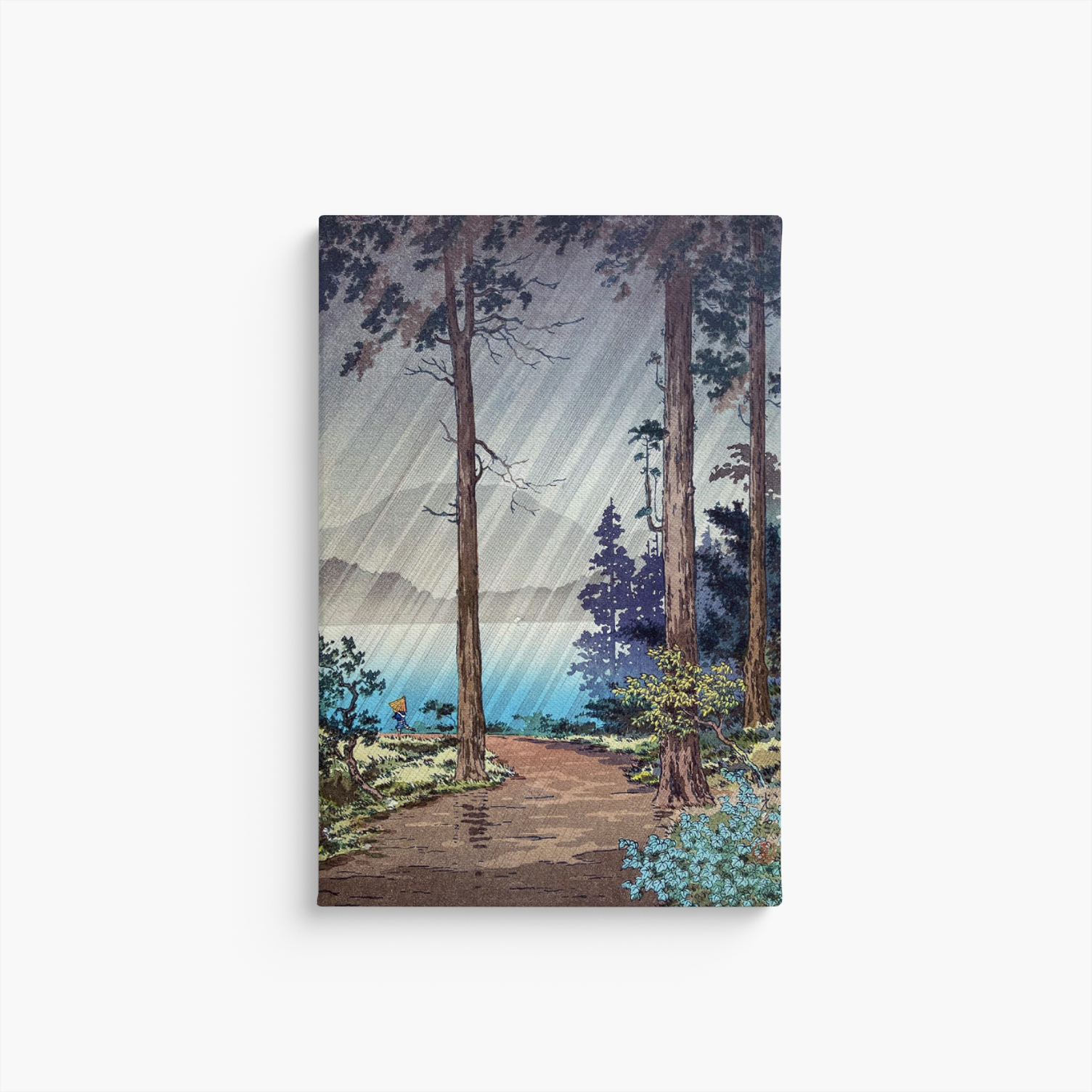 Image 2 of 4
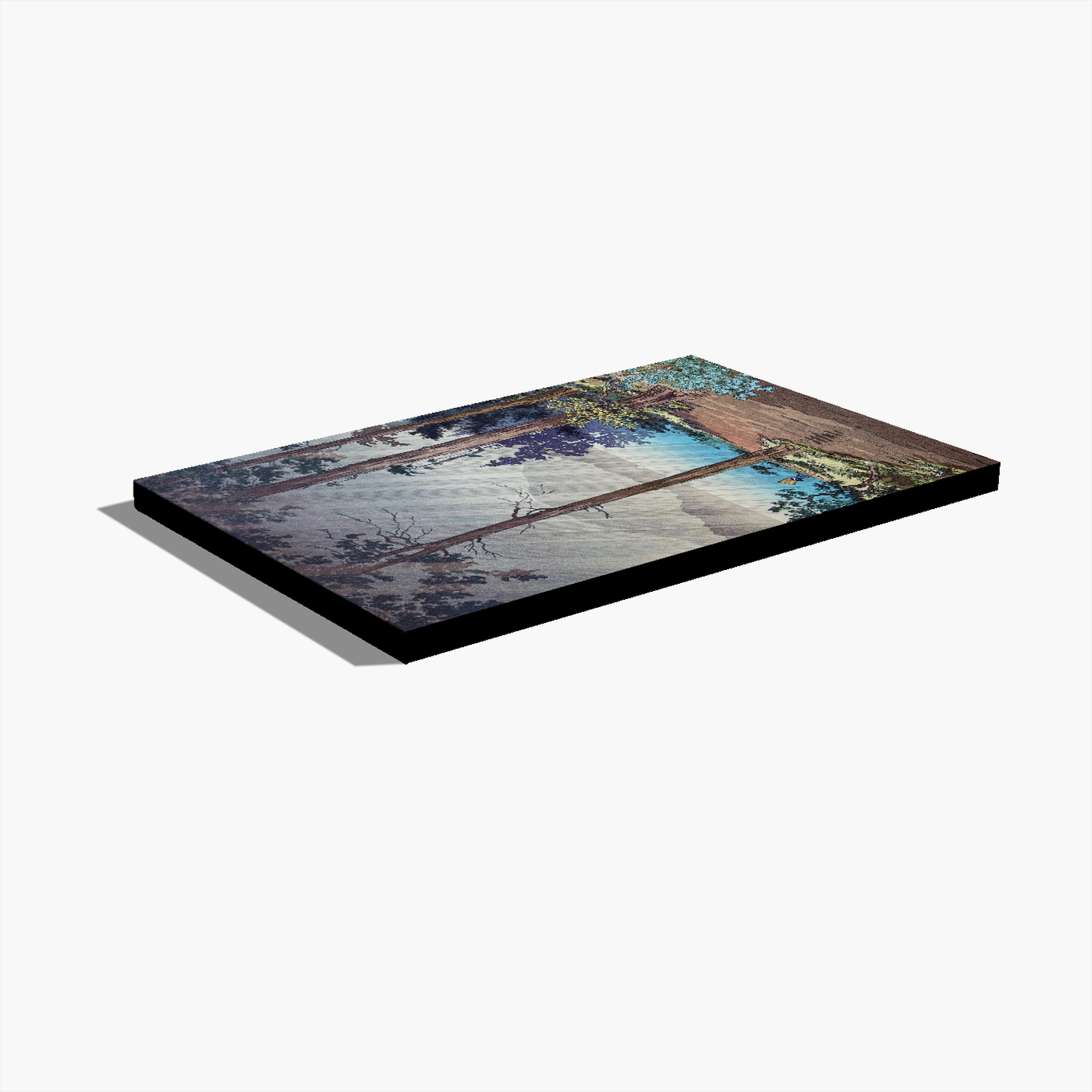 Image 3 of 4
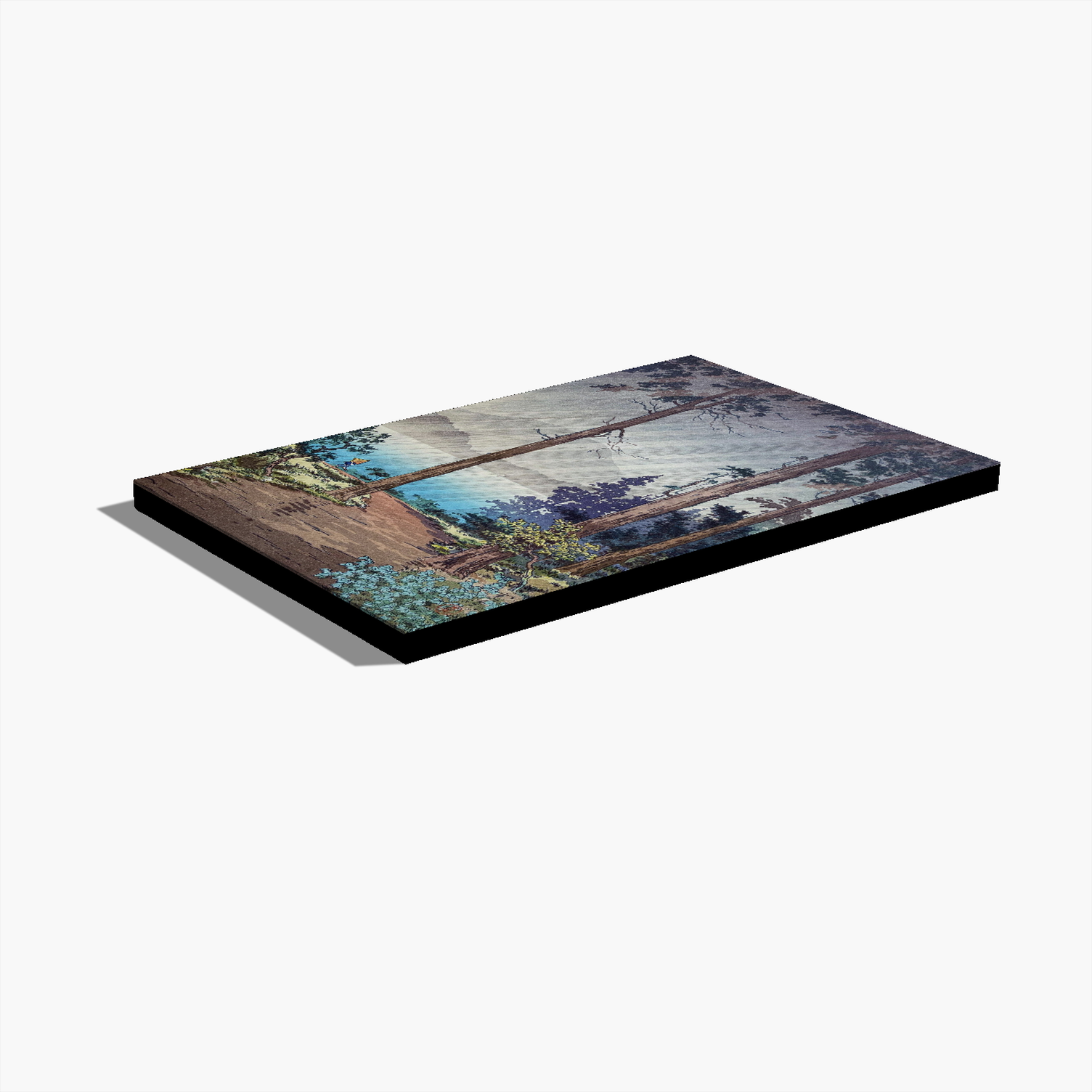 Image 4 of 4
Tsuchiya Koitsu's "Morning Rain at Hakone" (箱根湖水) (1938)
Here is the completed description in the UnitedArts style:
Premium quality canvas print of Tsuchiya Koitsu’s “Morning Rain at Hakone” woodblock painting
Transform your living space into a peaceful haven with art that speaks to the soul. This canvas reprint evokes the hushed beauty of rain passing over the mountains and waters of Hakone, filling your home with an atmosphere of mist, reflection, and contemplative calm. Built on a sturdy 1.5" wood frame, it offers a substantial gallery-style presence while preserving the subtle colour, atmospheric depth, and refined elegance of Koitsu’s original woodblock design.
More About the Art:
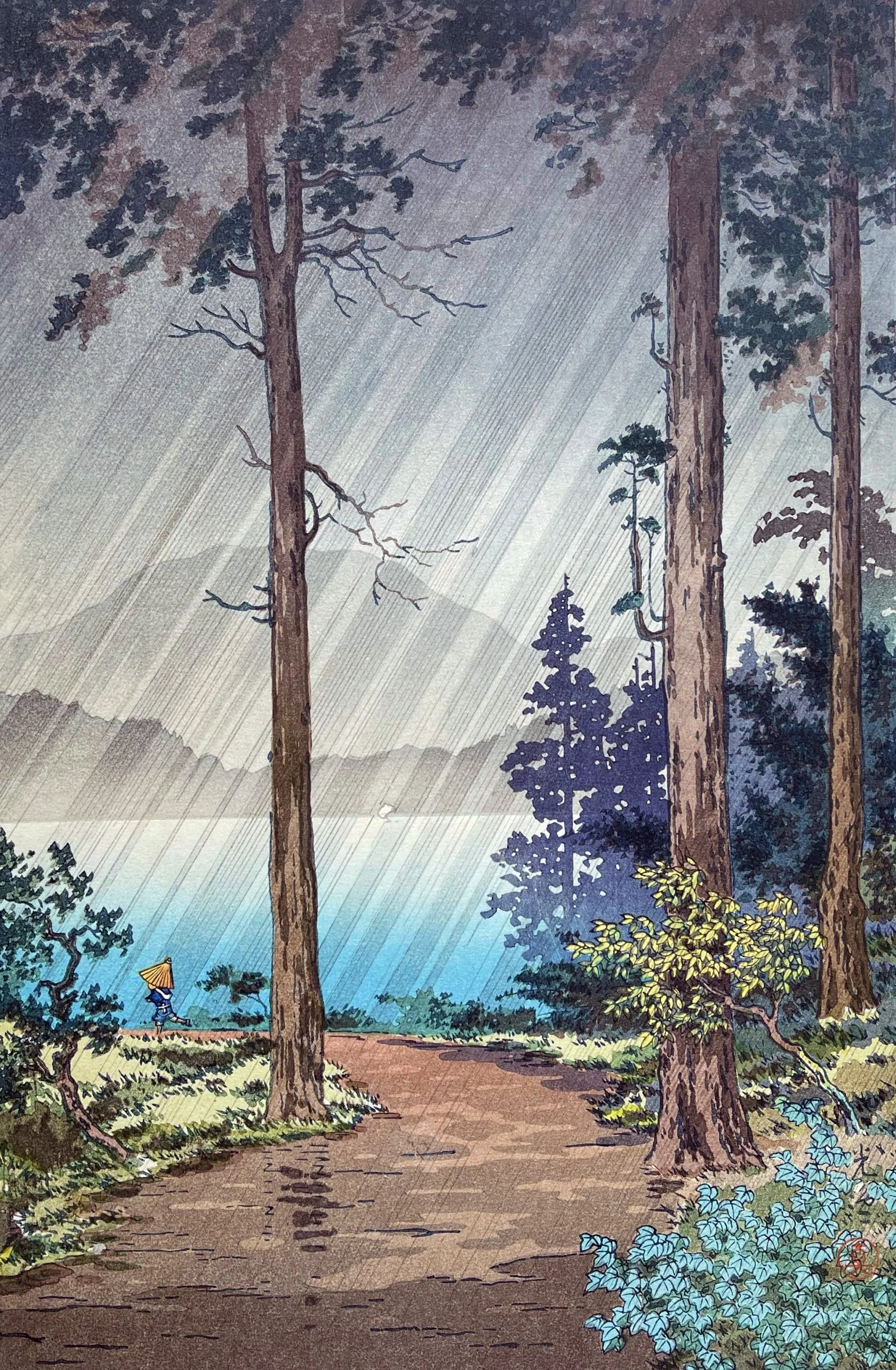
Tsuchiya Koitsu’s “Morning Rain at Hakone” is a masterful meditation on water, weather, and distance. First published in November 1938 by Doi Hangaten, the print is also recorded under the Japanese title Hakone Kosui, meaning “Lake Hakone.” It was produced in a large horizontal ōban format, perfectly suited to the expansive view of the lake and surrounding landscape. (ohmigallery.com)
Rather than presenting Hakone beneath brilliant sunlight or in the clarity of a panoramic view, Koitsu chooses a quieter and more elusive moment. Rain has settled over the lake, softening the outlines of the mountains and drawing a veil between foreground and distance. The scene appears suspended in moisture and mist, as though the entire landscape has slowed beneath the gentle weight of the weather.
In the foreground, the dark forms of trees and shoreline vegetation frame the composition. Their branches reach into the image with strong, expressive silhouettes, creating a sense of shelter and immediacy. Beyond them, the lake stretches outward in broad, subdued bands of colour. The distant hills dissolve gradually into rain and cloud, their shapes visible but softened, suggesting a world that continues beyond what the eye can clearly perceive.
Koitsu’s handling of depth is especially refined. He does not rely on sharp outlines or dramatic contrasts to establish distance. Instead, he uses tonal gradation. The foreground is darker and more defined; the middle distance becomes quieter; and the far shore nearly disappears into the rain. This gradual fading creates an extraordinary sense of atmosphere and gives the viewer the impression of looking through actual moisture-laden air.
The rain is not merely an element of weather. It is the emotional language of the composition. It quiets the landscape, unifies its forms, and transforms a famous scenic destination into a private experience of contemplation. Hakone is no longer simply a place to visit. It becomes a state of mind.
Small human or architectural elements within the scene, where visible, are subordinated to the larger presence of nature. Koitsu often placed figures, boats, bridges, or buildings within his landscapes without allowing them to dominate. Their modest scale reminds the viewer of humanity’s place within a much greater natural world. Here, the lake, trees, rain, and mountains remain the true subjects.
Hakone has long been one of Japan’s most celebrated landscape regions. Situated west of Tokyo and known for its mountain scenery, hot springs, wooded slopes, and views around Lake Ashi, it has attracted travellers, artists, and pilgrims for generations. The region also formed part of the historic Tōkaidō route connecting Edo and Kyoto, giving it deep associations with travel, transition, and the experience of moving through the Japanese landscape.
Koitsu’s interpretation belongs to a long artistic tradition of depicting Hakone, yet it feels distinctly modern in its emotional intimacy. Earlier ukiyo-e artists often treated the region as part of a journey, emphasizing roads, travellers, steep passes, and famous viewpoints. Koitsu instead turns inward. His Hakone is not bustling with movement. It is quiet, enveloped, and almost dreamlike.
The work’s Japanese title, Hakone Kosui, places emphasis on the lake itself. In the print, water becomes both surface and atmosphere. It reflects the dim light above while merging almost imperceptibly with the rain falling through the scene. The boundary between lake and sky seems uncertain, giving the composition a sense of unity and limitless space.
This treatment reflects one of Koitsu’s greatest strengths: his ability to make natural light and weather carry emotional meaning. He was deeply influenced by his teacher Kobayashi Kiyochika, whose innovative prints of modern Tokyo explored moonlight, firelight, shadow, and changing atmospheric conditions. Koitsu inherited this sensitivity and brought it into the refined collaborative medium of Shin Hanga.
In “Morning Rain at Hakone,” light is diffuse rather than direct. There is no single brilliant source and no dramatic illumination. Instead, brightness seems to pass quietly through the cloud cover and settle over the lake. The restrained palette allows delicate variations in tone to become expressive. Greys, blues, greens, and muted earth colours work together to create a visual atmosphere of coolness and calm.
The print also demonstrates the technical sophistication of Shin Hanga woodblock production. Subtle colour gradations, known as bokashi, allowed skilled printers to create soft transitions in the sky, water, and distant mountains. Through repeated impressions from carefully carved blocks, the image acquires depth and nuance while retaining the clarity and elegance unique to traditional Japanese woodblock printing.
The publisher Doi Hangaten played an important role in Koitsu’s mature career and issued many of his most admired landscape designs. Surviving impressions of “Morning Rain at Hakone” bear different combinations of publisher, carver, and printer seals depending on the period in which they were produced. Records identify later editions involving carver Harada and printer Seki, while other impressions are associated with printer Itō. (ohmigallery.com)
These variations reflect the continuing appreciation of the design after its original publication. As with many successful Shin Hanga works, the woodblocks were preserved and used for later impressions, allowing new generations of viewers to encounter Koitsu’s vision.
What makes “Morning Rain at Hakone” so compelling is its emotional restraint. There is no violent storm, no spectacular mountain peak, and no theatrical event. The rain is gentle. The lake is calm. The landscape is partly concealed. Koitsu understands that suggestion can be more powerful than complete revelation.
The partly obscured hills invite the imagination to continue beyond the visible scene. The rain encourages us to listen as much as look—to imagine water touching leaves, falling upon the lake, and dissolving into the soft surface below. The work appeals not only to the eye but to memory and sensation.
This quality gives the image a meditative character. It captures the particular calm that can descend during morning rain, when familiar places appear quieter and more inward. The world has not disappeared; it has simply withdrawn behind mist and water, waiting to be rediscovered.
The scene can also be understood through the Japanese appreciation for impermanence and seasonal change. Rain alters the landscape without destroying it. Mountains become shadows, colours deepen, reflections shift, and the familiar world briefly takes on another form. Koitsu preserves this transitional moment with exceptional sensitivity.
As a canvas reprint, “Morning Rain at Hakone” brings this atmosphere of stillness into the contemporary home. Its broad horizontal composition is particularly well suited to placement above a sofa, bed, dining table, console, or office desk. The receding view opens the visual space of a room, while the darker foreground provides structure and balance.
The image works beautifully in interiors inspired by Japanese design, natural materials, quiet luxury, minimalism, or traditional craftsmanship. Its subdued palette complements wood, stone, linen, neutral walls, and softly lit spaces. At the same time, the depth of the scene gives it enough visual presence to serve as a central work of wall art.
Unlike a brightly coloured decorative image, “Morning Rain at Hakone” does not demand immediate attention. Its effect unfolds gradually. From a distance, the viewer encounters a calm and balanced landscape. Closer inspection reveals layers of trees, water, cloud, mountain, and delicate tonal variation.
This makes it a work that rewards continued viewing. It can feel different depending on the hour, the room’s light, and the mood of the observer. On some days, the rain may appear peaceful; on others, nostalgic or mysterious. That openness is part of Koitsu’s enduring appeal.
“Morning Rain at Hakone” is ultimately a portrait of nature in a moment of withdrawal. The lake rests beneath a soft grey sky. The mountains recede into mist. The trees stand dark against the light. Through these simple elements, Koitsu creates an image of profound quietness—a world momentarily removed from noise, haste, and distraction.
More About the Artist:
Tsuchiya Koitsu was one of the distinguished masters of the Shin Hanga movement and one of the most sensitive interpreters of light and atmosphere in twentieth-century Japanese woodblock art. Born in Hamamatsu, Shizuoka Prefecture, in 1870, he developed a long artistic career that bridged the final decades of traditional ukiyo-e and the modern revival of collaborative woodblock printmaking. (Wikipedia)
His birth name was Koichi, although some accounts provide variations. At approximately fifteen years of age, he moved to Tokyo, where he initially entered an apprenticeship with a woodblock carver named Matsuzaki. This connection soon brought him into the circle of Kobayashi Kiyochika, one of the most innovative print artists of the Meiji era.
Koitsu became Kiyochika’s direct pupil and remained in his household for approximately nineteen years. (Wikipedia) This extended period of study profoundly shaped his artistic development. Kiyochika was celebrated for his dramatic explorations of light and darkness, particularly in views of Tokyo illuminated by moonlight, gas lamps, fire, and evening skies.
From his teacher, Koitsu learned to treat light not merely as a technical problem but as a source of emotion. A landscape could be transformed by the glow of a lantern, the reflection of a bridge, the fading colours of sunset, or the haze of rain. These lessons would eventually become central to Koitsu’s mature Shin Hanga designs.
His early career differed considerably from the peaceful landscapes for which he is now best known. During the First Sino-Japanese War of 1894–95, Koitsu produced prints depicting military events, a popular genre among artists and publishers of the period. He later worked in lithography and other forms of commercial art.
For many years, however, Koitsu did not establish himself primarily as a landscape print designer. His major contribution to Shin Hanga began relatively late in life. In 1931, when he was around sixty years old, he began producing modern woodblock landscape prints after connecting with the influential publisher Watanabe Shōzaburō. (My Modern Met)
Watanabe was one of the driving forces behind Shin Hanga, meaning “new prints.” The movement sought to revitalize traditional Japanese woodblock production through a collaborative system involving artist, carver, printer, and publisher. While retaining the craftsmanship of ukiyo-e, Shin Hanga artists introduced modern approaches to perspective, naturalistic atmosphere, individual expression, and the depiction of light. (Wikipedia)
Koitsu proved ideally suited to this revival. His decades of experience, combined with the influence of Kiyochika, allowed him to create designs of great technical assurance and emotional subtlety. From the early 1930s onward, he produced landscapes for publishers including Watanabe, Doi Sadaichi and Doi Hangaten, Kawaguchi, Tanaka Shōbidō, Takemura, and Baba Nobuhiko. (My Modern Met)
His mature subjects included temples, shrines, bridges, coastlines, parks, city streets, lakes, and historic landmarks. Yet the physical subject was often secondary to the atmosphere surrounding it. Koitsu repeatedly chose moments of transition: dawn, evening, nightfall, rain, snow, mist, and the passing glow of sunset.
These conditions allowed him to create landscapes that feel both observed and imagined. A temple under rain becomes an image of reverence. A bridge at night becomes a passage between memory and modernity. A lake beneath cloud becomes an invitation to stillness.
“Morning Rain at Hakone” is an outstanding example of this artistic approach. Koitsu takes a famous scenic region and avoids the obvious temptation to present it beneath clear skies or in brilliant colour. Instead, he allows rain to obscure and transform the view.
This choice reveals his confidence as an artist. He understood that the emotional character of a place could be expressed through what is hidden as much as through what is shown. The distant mountains in the print are powerful precisely because they are not fully visible. Their softened forms draw the viewer into the atmosphere rather than presenting the landscape as a fixed and complete spectacle.
Koitsu’s work is frequently compared with that of Kawase Hasui, another leading Shin Hanga landscape artist. Both men depicted temples, villages, roads, and natural scenery with great sensitivity to season and weather. Yet Koitsu’s art often possesses a distinctive luminosity and heightened contrast inherited from Kiyochika.
Even in muted works such as “Morning Rain at Hakone,” the composition is carefully structured around the passage of light. Dark branches frame paler water; distant hills dissolve into brighter mist; reflections and shadows guide the eye through the scene. This gives his landscapes a subtle theatrical quality without disturbing their calm.
Koitsu also possessed a strong sense of compositional framing. Trees, temple gates, bridges, and architectural elements often occupy the foreground, creating the impression that the viewer is looking into the landscape from a sheltered or partially concealed position. In “Morning Rain at Hakone,” the dark foreground helps the viewer feel physically present, as though standing beneath branches while looking across the rain-covered lake.
This method creates intimacy. Rather than offering a detached panoramic view, Koitsu places the observer within the scene. The viewer does not simply see the rain at Hakone; one seems to stand inside it.
The collaborative production process was essential to realizing these effects. Koitsu’s designs required highly skilled carvers to preserve delicate silhouettes and fine details, while printers had to control moisture, pigment, pressure, and gradation across multiple impressions. Doi Hangaten’s publication of the design allowed these qualities to emerge with exceptional refinement.
Koitsu continued to create landscape designs through the 1930s and 1940s. Although this mature phase of his career was relatively brief compared with his full artistic life, it produced the works upon which his international reputation now rests. He died in 1949, leaving behind a body of prints admired for their serene beauty, technical excellence, and emotional command of light. (Wikipedia)
Today, his works are cherished by collectors of Japanese prints and increasingly recognized as major achievements of the Shin Hanga movement. Their appeal extends beyond historical interest. Koitsu’s landscapes continue to feel immediate because they address universal experiences: the calm of rain, the mystery of distance, the glow of evening, and the restorative power of quiet places.
His art also speaks especially well to contemporary interiors. Modern life is often marked by speed, brightness, and visual noise. Koitsu offers the opposite. His scenes create room for silence. They encourage the eye to rest and the mind to slow.
“Morning Rain at Hakone” embodies this quality beautifully. It is a landscape of obscured distance and softened light, yet it does not feel gloomy. The rain brings unity rather than sadness. It gathers the trees, lake, and mountains into a single enveloping atmosphere.
Through this work, Koitsu demonstrates that beauty need not appear in perfect clarity. Sometimes it is most powerful when partly concealed—when mountains fade into mist, water merges with sky, and the world becomes quiet enough for the viewer’s imagination to enter.
As a canvas print, “Morning Rain at Hakone” carries Koitsu’s vision into the modern home with grace and depth. It offers not only a view of Japan, but an emotional refuge: a cool morning, a silent lake, and distant mountains slowly disappearing into rain.
Please note: This premium canvas reprint is built on a sturdy 1.5" wood frame for a substantial gallery-style presence. Please review all artwork, size, and product details carefully before ordering, as returns are not accepted for this item.
The title is sometimes listed as “Morning Rain at Lake Hakone” or simply “Lake Hakone.” Using “Morning Rain at Hakone” throughout keeps it consistent with your product title while remaining faithful to the documented print.
Here is the completed description in the UnitedArts style:
Premium quality canvas print of Tsuchiya Koitsu’s “Morning Rain at Hakone” woodblock painting
Transform your living space into a peaceful haven with art that speaks to the soul. This canvas reprint evokes the hushed beauty of rain passing over the mountains and waters of Hakone, filling your home with an atmosphere of mist, reflection, and contemplative calm. Built on a sturdy 1.5" wood frame, it offers a substantial gallery-style presence while preserving the subtle colour, atmospheric depth, and refined elegance of Koitsu’s original woodblock design.
More About the Art:
Tsuchiya Koitsu’s “Morning Rain at Hakone” is a masterful meditation on water, weather, and distance. First published in November 1938 by Doi Hangaten, the print is also recorded under the Japanese title Hakone Kosui, meaning “Lake Hakone.” It was produced in a large horizontal ōban format, perfectly suited to the expansive view of the lake and surrounding landscape. (ohmigallery.com)
Rather than presenting Hakone beneath brilliant sunlight or in the clarity of a panoramic view, Koitsu chooses a quieter and more elusive moment. Rain has settled over the lake, softening the outlines of the mountains and drawing a veil between foreground and distance. The scene appears suspended in moisture and mist, as though the entire landscape has slowed beneath the gentle weight of the weather.
In the foreground, the dark forms of trees and shoreline vegetation frame the composition. Their branches reach into the image with strong, expressive silhouettes, creating a sense of shelter and immediacy. Beyond them, the lake stretches outward in broad, subdued bands of colour. The distant hills dissolve gradually into rain and cloud, their shapes visible but softened, suggesting a world that continues beyond what the eye can clearly perceive.
Koitsu’s handling of depth is especially refined. He does not rely on sharp outlines or dramatic contrasts to establish distance. Instead, he uses tonal gradation. The foreground is darker and more defined; the middle distance becomes quieter; and the far shore nearly disappears into the rain. This gradual fading creates an extraordinary sense of atmosphere and gives the viewer the impression of looking through actual moisture-laden air.
The rain is not merely an element of weather. It is the emotional language of the composition. It quiets the landscape, unifies its forms, and transforms a famous scenic destination into a private experience of contemplation. Hakone is no longer simply a place to visit. It becomes a state of mind.
Small human or architectural elements within the scene, where visible, are subordinated to the larger presence of nature. Koitsu often placed figures, boats, bridges, or buildings within his landscapes without allowing them to dominate. Their modest scale reminds the viewer of humanity’s place within a much greater natural world. Here, the lake, trees, rain, and mountains remain the true subjects.
Hakone has long been one of Japan’s most celebrated landscape regions. Situated west of Tokyo and known for its mountain scenery, hot springs, wooded slopes, and views around Lake Ashi, it has attracted travellers, artists, and pilgrims for generations. The region also formed part of the historic Tōkaidō route connecting Edo and Kyoto, giving it deep associations with travel, transition, and the experience of moving through the Japanese landscape.
Koitsu’s interpretation belongs to a long artistic tradition of depicting Hakone, yet it feels distinctly modern in its emotional intimacy. Earlier ukiyo-e artists often treated the region as part of a journey, emphasizing roads, travellers, steep passes, and famous viewpoints. Koitsu instead turns inward. His Hakone is not bustling with movement. It is quiet, enveloped, and almost dreamlike.
The work’s Japanese title, Hakone Kosui, places emphasis on the lake itself. In the print, water becomes both surface and atmosphere. It reflects the dim light above while merging almost imperceptibly with the rain falling through the scene. The boundary between lake and sky seems uncertain, giving the composition a sense of unity and limitless space.
This treatment reflects one of Koitsu’s greatest strengths: his ability to make natural light and weather carry emotional meaning. He was deeply influenced by his teacher Kobayashi Kiyochika, whose innovative prints of modern Tokyo explored moonlight, firelight, shadow, and changing atmospheric conditions. Koitsu inherited this sensitivity and brought it into the refined collaborative medium of Shin Hanga.
In “Morning Rain at Hakone,” light is diffuse rather than direct. There is no single brilliant source and no dramatic illumination. Instead, brightness seems to pass quietly through the cloud cover and settle over the lake. The restrained palette allows delicate variations in tone to become expressive. Greys, blues, greens, and muted earth colours work together to create a visual atmosphere of coolness and calm.
The print also demonstrates the technical sophistication of Shin Hanga woodblock production. Subtle colour gradations, known as bokashi, allowed skilled printers to create soft transitions in the sky, water, and distant mountains. Through repeated impressions from carefully carved blocks, the image acquires depth and nuance while retaining the clarity and elegance unique to traditional Japanese woodblock printing.
The publisher Doi Hangaten played an important role in Koitsu’s mature career and issued many of his most admired landscape designs. Surviving impressions of “Morning Rain at Hakone” bear different combinations of publisher, carver, and printer seals depending on the period in which they were produced. Records identify later editions involving carver Harada and printer Seki, while other impressions are associated with printer Itō. (ohmigallery.com)
These variations reflect the continuing appreciation of the design after its original publication. As with many successful Shin Hanga works, the woodblocks were preserved and used for later impressions, allowing new generations of viewers to encounter Koitsu’s vision.
What makes “Morning Rain at Hakone” so compelling is its emotional restraint. There is no violent storm, no spectacular mountain peak, and no theatrical event. The rain is gentle. The lake is calm. The landscape is partly concealed. Koitsu understands that suggestion can be more powerful than complete revelation.
The partly obscured hills invite the imagination to continue beyond the visible scene. The rain encourages us to listen as much as look—to imagine water touching leaves, falling upon the lake, and dissolving into the soft surface below. The work appeals not only to the eye but to memory and sensation.
This quality gives the image a meditative character. It captures the particular calm that can descend during morning rain, when familiar places appear quieter and more inward. The world has not disappeared; it has simply withdrawn behind mist and water, waiting to be rediscovered.
The scene can also be understood through the Japanese appreciation for impermanence and seasonal change. Rain alters the landscape without destroying it. Mountains become shadows, colours deepen, reflections shift, and the familiar world briefly takes on another form. Koitsu preserves this transitional moment with exceptional sensitivity.
As a canvas reprint, “Morning Rain at Hakone” brings this atmosphere of stillness into the contemporary home. Its broad horizontal composition is particularly well suited to placement above a sofa, bed, dining table, console, or office desk. The receding view opens the visual space of a room, while the darker foreground provides structure and balance.
The image works beautifully in interiors inspired by Japanese design, natural materials, quiet luxury, minimalism, or traditional craftsmanship. Its subdued palette complements wood, stone, linen, neutral walls, and softly lit spaces. At the same time, the depth of the scene gives it enough visual presence to serve as a central work of wall art.
Unlike a brightly coloured decorative image, “Morning Rain at Hakone” does not demand immediate attention. Its effect unfolds gradually. From a distance, the viewer encounters a calm and balanced landscape. Closer inspection reveals layers of trees, water, cloud, mountain, and delicate tonal variation.
This makes it a work that rewards continued viewing. It can feel different depending on the hour, the room’s light, and the mood of the observer. On some days, the rain may appear peaceful; on others, nostalgic or mysterious. That openness is part of Koitsu’s enduring appeal.
“Morning Rain at Hakone” is ultimately a portrait of nature in a moment of withdrawal. The lake rests beneath a soft grey sky. The mountains recede into mist. The trees stand dark against the light. Through these simple elements, Koitsu creates an image of profound quietness—a world momentarily removed from noise, haste, and distraction.
More About the Artist:
Tsuchiya Koitsu was one of the distinguished masters of the Shin Hanga movement and one of the most sensitive interpreters of light and atmosphere in twentieth-century Japanese woodblock art. Born in Hamamatsu, Shizuoka Prefecture, in 1870, he developed a long artistic career that bridged the final decades of traditional ukiyo-e and the modern revival of collaborative woodblock printmaking. (Wikipedia)
His birth name was Koichi, although some accounts provide variations. At approximately fifteen years of age, he moved to Tokyo, where he initially entered an apprenticeship with a woodblock carver named Matsuzaki. This connection soon brought him into the circle of Kobayashi Kiyochika, one of the most innovative print artists of the Meiji era.
Koitsu became Kiyochika’s direct pupil and remained in his household for approximately nineteen years. (Wikipedia) This extended period of study profoundly shaped his artistic development. Kiyochika was celebrated for his dramatic explorations of light and darkness, particularly in views of Tokyo illuminated by moonlight, gas lamps, fire, and evening skies.
From his teacher, Koitsu learned to treat light not merely as a technical problem but as a source of emotion. A landscape could be transformed by the glow of a lantern, the reflection of a bridge, the fading colours of sunset, or the haze of rain. These lessons would eventually become central to Koitsu’s mature Shin Hanga designs.
His early career differed considerably from the peaceful landscapes for which he is now best known. During the First Sino-Japanese War of 1894–95, Koitsu produced prints depicting military events, a popular genre among artists and publishers of the period. He later worked in lithography and other forms of commercial art.
For many years, however, Koitsu did not establish himself primarily as a landscape print designer. His major contribution to Shin Hanga began relatively late in life. In 1931, when he was around sixty years old, he began producing modern woodblock landscape prints after connecting with the influential publisher Watanabe Shōzaburō. (My Modern Met)
Watanabe was one of the driving forces behind Shin Hanga, meaning “new prints.” The movement sought to revitalize traditional Japanese woodblock production through a collaborative system involving artist, carver, printer, and publisher. While retaining the craftsmanship of ukiyo-e, Shin Hanga artists introduced modern approaches to perspective, naturalistic atmosphere, individual expression, and the depiction of light. (Wikipedia)
Koitsu proved ideally suited to this revival. His decades of experience, combined with the influence of Kiyochika, allowed him to create designs of great technical assurance and emotional subtlety. From the early 1930s onward, he produced landscapes for publishers including Watanabe, Doi Sadaichi and Doi Hangaten, Kawaguchi, Tanaka Shōbidō, Takemura, and Baba Nobuhiko. (My Modern Met)
His mature subjects included temples, shrines, bridges, coastlines, parks, city streets, lakes, and historic landmarks. Yet the physical subject was often secondary to the atmosphere surrounding it. Koitsu repeatedly chose moments of transition: dawn, evening, nightfall, rain, snow, mist, and the passing glow of sunset.
These conditions allowed him to create landscapes that feel both observed and imagined. A temple under rain becomes an image of reverence. A bridge at night becomes a passage between memory and modernity. A lake beneath cloud becomes an invitation to stillness.
“Morning Rain at Hakone” is an outstanding example of this artistic approach. Koitsu takes a famous scenic region and avoids the obvious temptation to present it beneath clear skies or in brilliant colour. Instead, he allows rain to obscure and transform the view.
This choice reveals his confidence as an artist. He understood that the emotional character of a place could be expressed through what is hidden as much as through what is shown. The distant mountains in the print are powerful precisely because they are not fully visible. Their softened forms draw the viewer into the atmosphere rather than presenting the landscape as a fixed and complete spectacle.
Koitsu’s work is frequently compared with that of Kawase Hasui, another leading Shin Hanga landscape artist. Both men depicted temples, villages, roads, and natural scenery with great sensitivity to season and weather. Yet Koitsu’s art often possesses a distinctive luminosity and heightened contrast inherited from Kiyochika.
Even in muted works such as “Morning Rain at Hakone,” the composition is carefully structured around the passage of light. Dark branches frame paler water; distant hills dissolve into brighter mist; reflections and shadows guide the eye through the scene. This gives his landscapes a subtle theatrical quality without disturbing their calm.
Koitsu also possessed a strong sense of compositional framing. Trees, temple gates, bridges, and architectural elements often occupy the foreground, creating the impression that the viewer is looking into the landscape from a sheltered or partially concealed position. In “Morning Rain at Hakone,” the dark foreground helps the viewer feel physically present, as though standing beneath branches while looking across the rain-covered lake.
This method creates intimacy. Rather than offering a detached panoramic view, Koitsu places the observer within the scene. The viewer does not simply see the rain at Hakone; one seems to stand inside it.
The collaborative production process was essential to realizing these effects. Koitsu’s designs required highly skilled carvers to preserve delicate silhouettes and fine details, while printers had to control moisture, pigment, pressure, and gradation across multiple impressions. Doi Hangaten’s publication of the design allowed these qualities to emerge with exceptional refinement.
Koitsu continued to create landscape designs through the 1930s and 1940s. Although this mature phase of his career was relatively brief compared with his full artistic life, it produced the works upon which his international reputation now rests. He died in 1949, leaving behind a body of prints admired for their serene beauty, technical excellence, and emotional command of light. (Wikipedia)
Today, his works are cherished by collectors of Japanese prints and increasingly recognized as major achievements of the Shin Hanga movement. Their appeal extends beyond historical interest. Koitsu’s landscapes continue to feel immediate because they address universal experiences: the calm of rain, the mystery of distance, the glow of evening, and the restorative power of quiet places.
His art also speaks especially well to contemporary interiors. Modern life is often marked by speed, brightness, and visual noise. Koitsu offers the opposite. His scenes create room for silence. They encourage the eye to rest and the mind to slow.
“Morning Rain at Hakone” embodies this quality beautifully. It is a landscape of obscured distance and softened light, yet it does not feel gloomy. The rain brings unity rather than sadness. It gathers the trees, lake, and mountains into a single enveloping atmosphere.
Through this work, Koitsu demonstrates that beauty need not appear in perfect clarity. Sometimes it is most powerful when partly concealed—when mountains fade into mist, water merges with sky, and the world becomes quiet enough for the viewer’s imagination to enter.
As a canvas print, “Morning Rain at Hakone” carries Koitsu’s vision into the modern home with grace and depth. It offers not only a view of Japan, but an emotional refuge: a cool morning, a silent lake, and distant mountains slowly disappearing into rain.
Please note: This premium canvas reprint is built on a sturdy 1.5" wood frame for a substantial gallery-style presence. Please review all artwork, size, and product details carefully before ordering, as returns are not accepted for this item.
The title is sometimes listed as “Morning Rain at Lake Hakone” or simply “Lake Hakone.” Using “Morning Rain at Hakone” throughout keeps it consistent with your product title while remaining faithful to the documented print.