
 Image 1 of 4
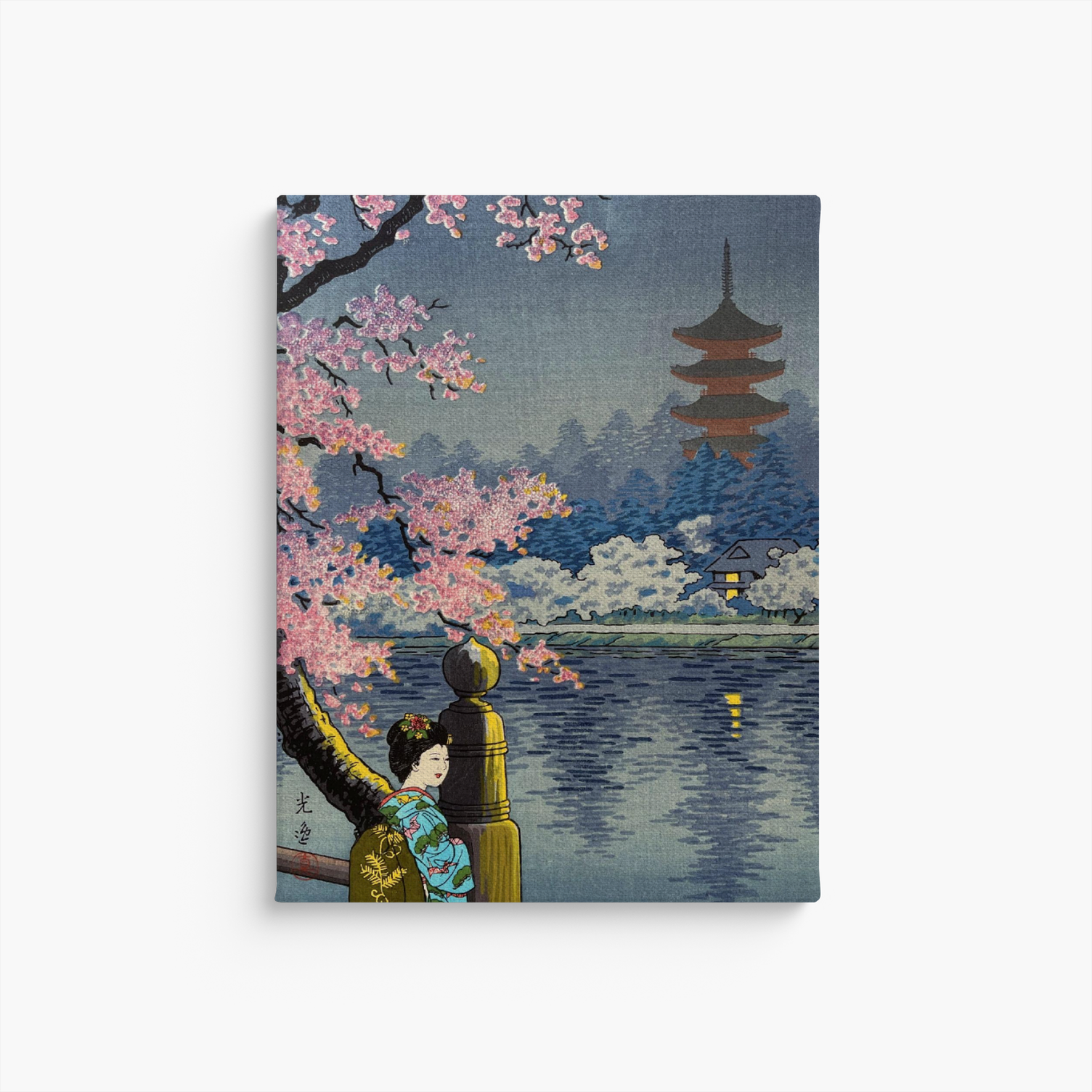 Image 2 of 4
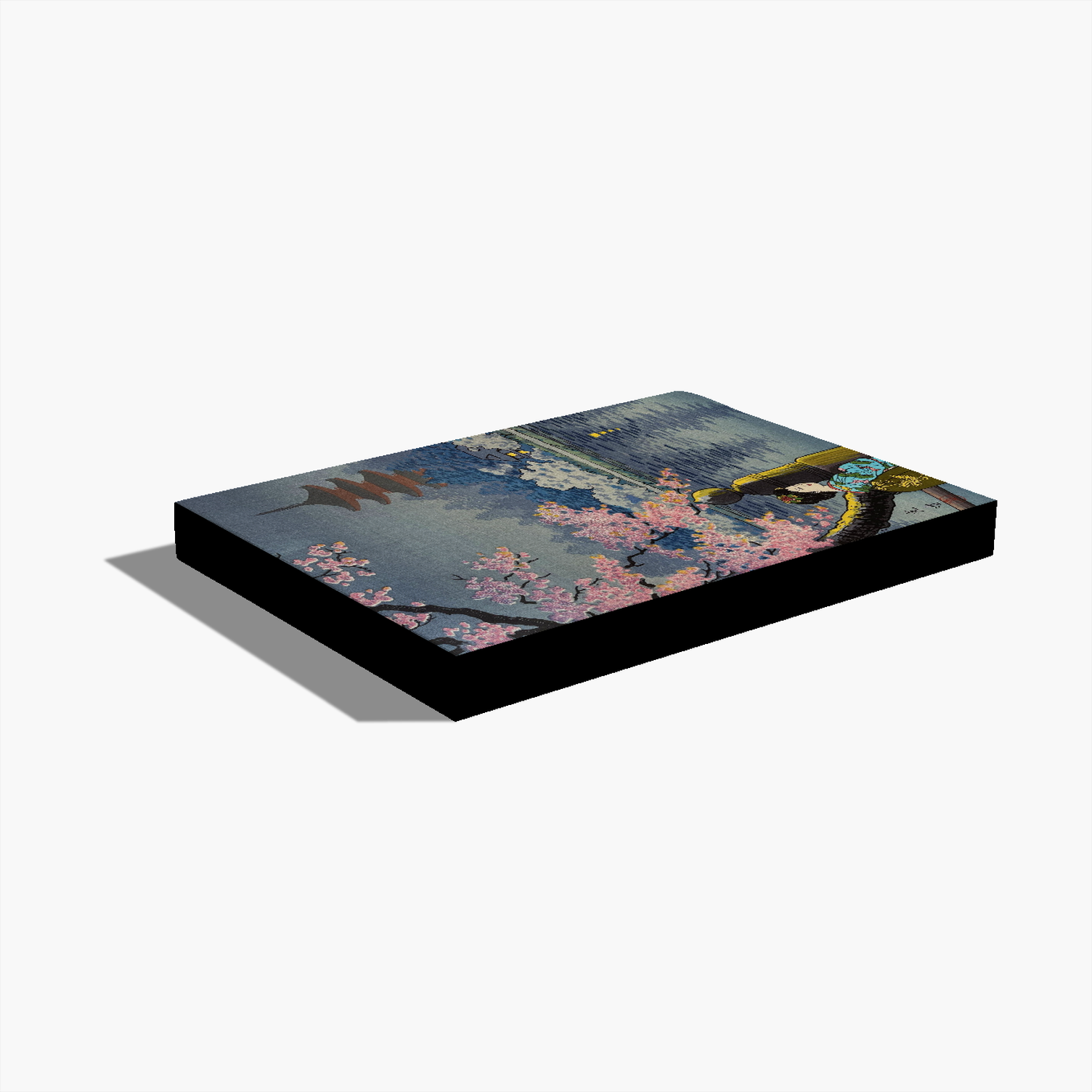 Image 3 of 4
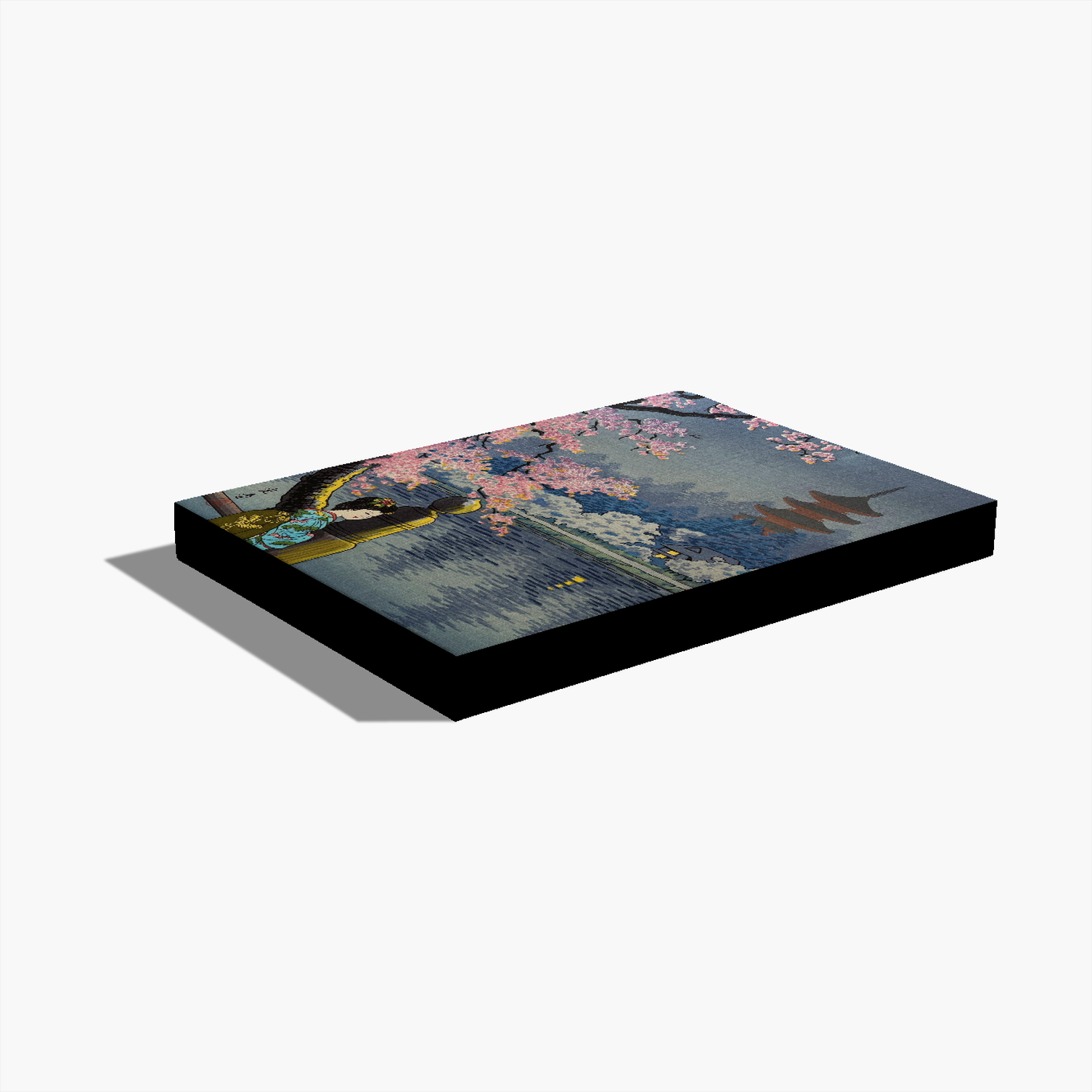 Image 4 of 4
Tsuchiya Koitsu's "Geisha and Cherry Tree, Ueno Park" (1939)
Premium quality canvas print of Tsuchiya Koitsu’s “Geisha and Cherry Tree, Ueno Park” woodblock painting
Transform your living space into a peaceful haven with art that speaks to the soul. This canvas reprint evokes the fleeting splendour of cherry-blossom season in old Tokyo, filling your home with an atmosphere of elegance, romance, and quiet contemplation. Built on a sturdy 1.5" wood frame, it offers a substantial gallery-style presence while preserving the refined colour, delicate detail, and luminous beauty of Koitsu’s original woodblock design.
More About the Art:
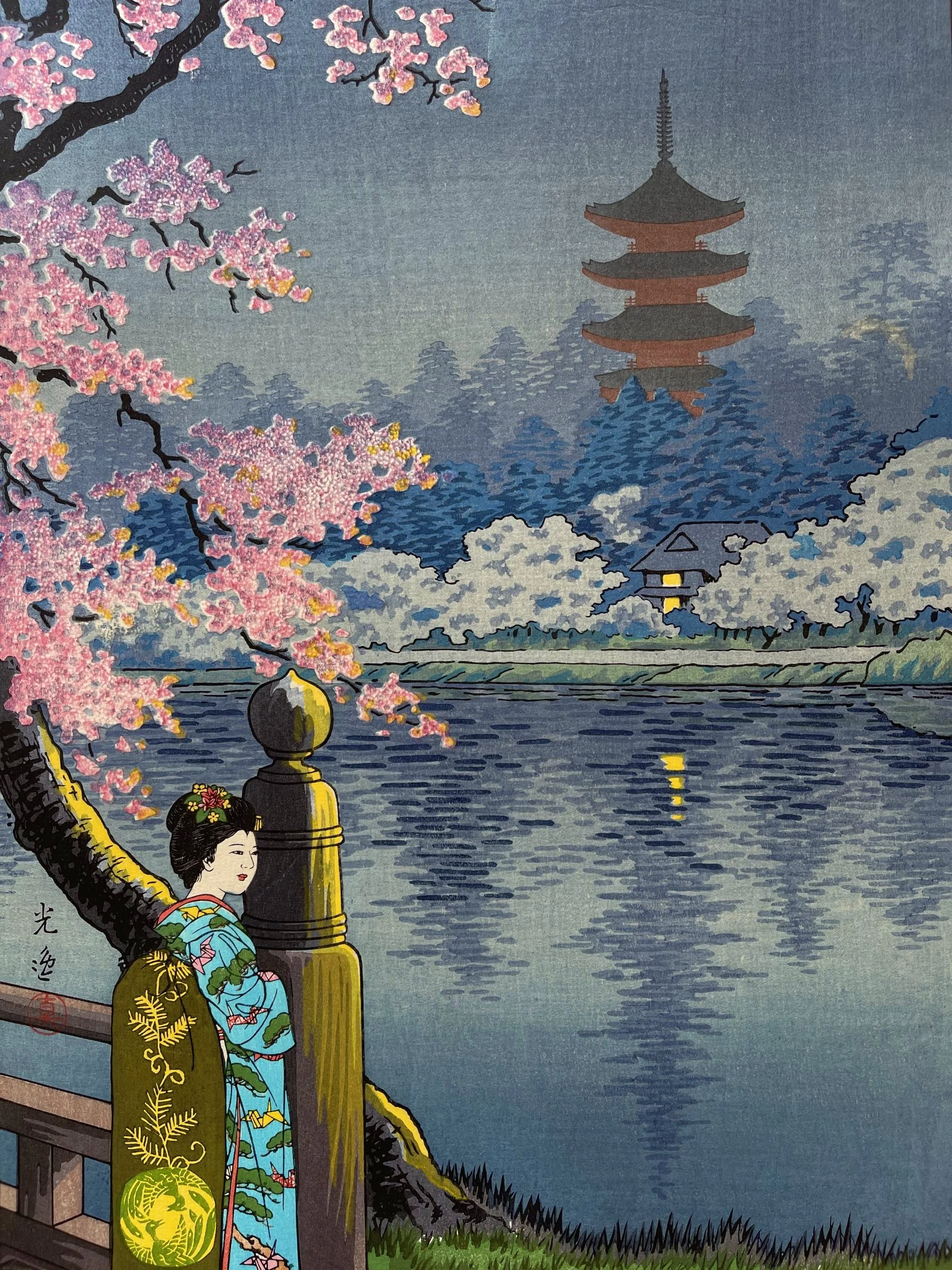
Tsuchiya Koitsu’s “Geisha and Cherry Tree, Ueno Park” is an enchanting celebration of spring in Tokyo, combining the elegance of the human figure with the ephemeral beauty of cherry blossoms. First published by Doi Hangaten in 1939, the work is generally identified as an oversized ōban-format design and is also known more simply as “Ueno Park.” The date inscribed in the print corresponds to the spring of Shōwa 14, or 1939. (Ukiyo-e)
In the composition, two elegantly dressed women stand beneath a magnificent flowering cherry tree. Their patterned kimono, carefully arranged hair, and poised silhouettes bring refinement and human warmth to the scene, yet Koitsu does not allow them to overwhelm the landscape. Instead, the women become part of the seasonal harmony around them. Their graceful presence is echoed in the curving branches above, while the delicate blossoms form a luminous canopy that seems to gather the entire composition into a moment of suspended beauty.
The cherry tree is the true emotional centre of the work. Its dark trunk and spreading branches create a strong structure across the image, while masses of pale blossoms soften its form and fill the surrounding space with light. Koitsu’s mastery of colour gradation gives the flowers depth without making them heavy. They appear abundant yet fragile, their beauty heightened by the knowledge that the blossoming season will soon pass.
This awareness of transience is essential to the meaning of cherry blossoms in Japanese culture. Sakura are admired not only because they are beautiful, but because their beauty is brief. They bloom magnificently, transform the landscape for a short time, and then fall. For centuries, this cycle has been associated with mono no aware—a heightened sensitivity to the impermanence of things and the gentle sadness that accompanies passing beauty.
Koitsu’s print captures this feeling without overt sentimentality. There is no dramatic event and no elaborate narrative. The women simply stand beneath the tree, absorbed in the experience of spring. Their stillness allows the viewer to imagine the softness of the air, the faint movement of the branches, and the quiet pleasure of looking upward into a sky filled with blossoms.
Ueno Park provides a particularly meaningful setting for such a scene. Located in Tokyo, Ueno has long been celebrated as one of the city’s most important places for viewing cherry blossoms. Its avenues, temple grounds, ponds, and mature trees have drawn generations of visitors during the spring season. Koitsu presents the park not as a crowded public attraction, however, but as an intimate and almost dreamlike refuge.
By reducing the signs of urban activity, he transforms Ueno into a timeless garden. The women appear to inhabit a private interval within the modern city—a moment when daily movement has slowed and attention has turned entirely toward nature. This quiet treatment distinguishes the work from bustling festival scenes and crowded depictions of cherry-blossom viewing. Koitsu is less interested in social spectacle than in atmosphere.
The figures also connect the print to the Japanese tradition of bijin-ga, or images of beautiful women. Yet Koitsu’s approach differs from the close portraits associated with many earlier ukiyo-e artists. The women are not isolated as decorative subjects. Their beauty is inseparable from the setting: the kimono patterns, flowering branches, soft colours, and spring atmosphere all contribute to one harmonious visual experience.
This balance between figure and landscape gives the print unusual richness. Koitsu was best known for temples, bridges, coastlines, and views illuminated by rain, moonlight, or evening glow. In “Geisha and Cherry Tree, Ueno Park,” he brings the same atmospheric sensitivity to a figural scene. The result feels both intimate and expansive, combining the refinement of a portrait with the contemplative depth of a landscape.
Light plays a subtle but essential role. The blossoms seem to hold and diffuse the brightness around them, creating a gentle radiance rather than a sharp contrast. The darker areas of the tree and the women’s garments deepen the surrounding tones, making the pale flowers appear even more luminous. Through this carefully controlled relationship of light and shadow, Koitsu turns an ordinary spring outing into an image of poetic enchantment.
The title often identifies the women as geisha, figures traditionally associated with cultivated artistry, music, dance, conversation, and refined dress. Whether understood specifically as geisha or more generally as elegantly dressed women enjoying the season, their appearance intensifies the cultural elegance of the scene. Their composure mirrors the restraint of the composition itself.
What makes “Geisha and Cherry Tree, Ueno Park” especially compelling is its union of permanence and change. The great tree appears strong and enduring, yet its blossoms are temporary. The women are carefully dressed and poised, yet they too belong to a passing moment. The park is a familiar place, but Koitsu transforms it through season and light into something fleeting and almost unreal.
This tension gives the image emotional depth. It is not merely a decorative picture of cherry blossoms, nor simply a nostalgic view of old Tokyo. It is a meditation on the human desire to pause before beauty, to recognize it fully, and perhaps to preserve something of it before it disappears.
As a canvas reprint, “Geisha and Cherry Tree, Ueno Park” brings warmth, grace, and cultural depth into the contemporary home. Its vertical composition is particularly effective in spaces that benefit from height, including an entryway, bedroom, reading corner, stairway, dining area, or the wall beside a console or cabinet. The strong tree trunk provides visual structure, while the blossoms and elegant figures soften the surrounding room.
The print works beautifully in interiors inspired by Japanese design, nature, traditional craftsmanship, vintage elegance, or quiet luxury. Its combination of floral beauty and figurative detail gives it a welcoming quality, while its restrained palette allows it to remain sophisticated rather than overly decorative.
Koitsu’s image invites the viewer into a world where the pace of life has slowed. Beneath the flowering branches, the women stand in quiet appreciation. Around them, spring reaches its most beautiful and most fragile moment. “Geisha and Cherry Tree, Ueno Park” is a celebration of elegance, season, and stillness—an enduring image of the brief moment when nature transforms the city into poetry.
More About the Artist:
Tsuchiya Koitsu was one of the distinguished landscape artists associated with the Shin Hanga movement, the twentieth-century revival of traditional Japanese woodblock printing. Born in 1870 near Hamamatsu in Shizuoka Prefecture, he developed a remarkable ability to transform temples, parks, bridges, coastlines, and city views through delicate effects of light, colour, weather, and atmosphere.
His birth name was Koichi, although some historical accounts provide variations. At approximately fifteen years of age, he moved to Tokyo and entered the world of woodblock printmaking. He initially studied with Matsuzaki, a woodblock carver connected with Kobayashi Kiyochika, before becoming a direct pupil of Kiyochika himself.
Kobayashi Kiyochika was one of the most innovative print artists of the late nineteenth century. He became renowned for his dramatic treatment of light and shadow, particularly in scenes of modern Tokyo illuminated by moonlight, gas lamps, fire, and evening skies. Koitsu lived and worked in Kiyochika’s household for roughly nineteen years, and the experience had a lasting influence on his artistic vision. (Wikipedia)
Under Kiyochika, Koitsu learned that light could do more than describe the physical world. It could create emotion, establish atmosphere, and transform an ordinary place into something mysterious or profound. This lesson would become one of the defining features of his mature prints.
Koitsu’s early work included designs related to the First Sino-Japanese War of 1894–95, a subject that occupied many printmakers of the period. He also worked in lithography and other commercial forms of image production. For much of his early career, however, he had not yet developed the body of serene landscape prints for which he is best remembered today.
A major turning point occurred in 1931, when Koitsu began working with Watanabe Shōzaburō, the influential publisher who played a central role in establishing and promoting the Shin Hanga movement. Koitsu was already around sixty years old, making his mature emergence as a major landscape-print designer relatively late in life. (Wikipedia)
Shin Hanga, meaning “new prints,” renewed the traditional collaborative system of Japanese woodblock production. The artist supplied the design, while specialist carvers cut the woodblocks, printers applied the colours, and publishers financed, coordinated, and distributed the completed works. This system allowed Koitsu’s subtle designs to be realized through highly skilled craftsmanship.
The movement preserved essential features of ukiyo-e while introducing a more modern interest in naturalistic light, spatial depth, nuanced colour, and individual artistic expression. Shin Hanga prints were especially admired by international collectors, who valued their combination of traditional technique and modern atmosphere.
Although Koitsu initially worked with Watanabe, he later created designs for several publishers, including Doi Sadaichi and Doi Hangaten, Kawaguchi, Baba Nobuhiko, Tanaka Shōbidō, and Takemura. Doi became particularly important to his mature career and published many of his most admired designs. (Wikipedia)
“Geisha and Cherry Tree, Ueno Park” was among the works associated with Doi Hangaten. Original and later impressions may carry different combinations of publisher, carver, and printer seals, reflecting the continuing life of the design after its first publication. Surviving examples demonstrate the care with which publishers preserved and reissued Koitsu’s most popular images. (Ukiyo-e)
Koitsu’s reputation rests above all on his control of atmosphere. He repeatedly returned to rain, mist, twilight, snow, reflected light, moonlit water, and the warm glow of lamps. These elements were never merely technical displays. They allowed him to suggest states of feeling: solitude, reverence, nostalgia, mystery, and peace.
His temples often appear at quiet hours, when visitors have departed and architecture seems to merge with shadow. His bridges rise over dark or reflective water. His coastlines stretch beneath glowing skies. Even when human figures appear, they are usually restrained and absorbed in the larger environment.
This approach can also be seen in “Geisha and Cherry Tree, Ueno Park.” Although the women are more visually prominent than figures in many of Koitsu’s landscapes, they remain integrated with the natural setting. Their elegance does not compete with the cherry tree; it complements it. Human beauty and seasonal beauty are presented as parallel expressions of refinement and transience.
Koitsu’s handling of cherry blossoms is especially sensitive. The flowers are not simply botanical details. They function as light, atmosphere, texture, and emotion. Their pale abundance creates a visual field against which the darker forms of branches and garments become more expressive. The print demonstrates how effectively Koitsu could adapt his landscape sensibility to a composition centred on human figures.
His work is sometimes compared with that of Kawase Hasui, another great Shin Hanga landscape artist. Both artists were fascinated by weather, season, traditional architecture, and the disappearing beauty of older Japan. Yet Koitsu’s images often have a distinctive theatrical luminosity inherited from Kiyochika. Light appears to reveal the landscape gradually, creating a heightened sense of drama within otherwise quiet scenes.
This quality makes his work especially effective in reproduction on canvas. The gradations of sky, glowing blossoms, deep shadows, and carefully structured forms create visual depth from a distance, while closer viewing reveals the delicacy of the composition. His prints can therefore serve both as refined decorative works and as invitations to prolonged contemplation.
Koitsu continued producing designs through the 1930s and 1940s, creating many of his most admired prints during the final two decades of his life. He died in 1949, leaving behind a body of work that has continued to gain recognition among collectors, museums, and admirers of Japanese printmaking. (Wikipedia)
Today, Tsuchiya Koitsu is regarded as one of the artists who gave Shin Hanga landscape printing its emotional richness and luminous character. His work preserves a vision of Japan shaped by traditional places, changing seasons, and carefully observed moments of light. Yet it does more than document a country or period. It creates spaces of feeling.
In “Geisha and Cherry Tree, Ueno Park,” Koitsu offers a particularly graceful expression of his art. The scene combines the sophistication of the city, the cultivated elegance of the women, and the fleeting beauty of spring. Through these elements, he creates an image that feels nostalgic without becoming sentimental and decorative without losing emotional depth.
The print reminds us that Koitsu’s art was never only about famous landmarks. His true subject was atmosphere—the invisible feeling that arises when season, place, light, and human presence come briefly into harmony. Beneath the cherry tree in Ueno Park, that harmony is complete.
As a canvas print, this work carries Koitsu’s refined vision into the modern interior. It offers an atmosphere of gentleness and sophistication, while preserving the cultural richness of Japanese woodblock art. To live with “Geisha and Cherry Tree, Ueno Park” is to live with a permanent reminder of spring’s most beautiful lesson: that the things we cherish are often made more precious by their passing.
Please note: This premium canvas reprint is built on a sturdy 1.5" wood frame for a substantial gallery-style presence. Please review all artwork, size, and product details carefully before ordering, as returns are not accepted for this item.
Premium quality canvas print of Tsuchiya Koitsu’s “Geisha and Cherry Tree, Ueno Park” woodblock painting
Transform your living space into a peaceful haven with art that speaks to the soul. This canvas reprint evokes the fleeting splendour of cherry-blossom season in old Tokyo, filling your home with an atmosphere of elegance, romance, and quiet contemplation. Built on a sturdy 1.5" wood frame, it offers a substantial gallery-style presence while preserving the refined colour, delicate detail, and luminous beauty of Koitsu’s original woodblock design.
More About the Art:
Tsuchiya Koitsu’s “Geisha and Cherry Tree, Ueno Park” is an enchanting celebration of spring in Tokyo, combining the elegance of the human figure with the ephemeral beauty of cherry blossoms. First published by Doi Hangaten in 1939, the work is generally identified as an oversized ōban-format design and is also known more simply as “Ueno Park.” The date inscribed in the print corresponds to the spring of Shōwa 14, or 1939. (Ukiyo-e)
In the composition, two elegantly dressed women stand beneath a magnificent flowering cherry tree. Their patterned kimono, carefully arranged hair, and poised silhouettes bring refinement and human warmth to the scene, yet Koitsu does not allow them to overwhelm the landscape. Instead, the women become part of the seasonal harmony around them. Their graceful presence is echoed in the curving branches above, while the delicate blossoms form a luminous canopy that seems to gather the entire composition into a moment of suspended beauty.
The cherry tree is the true emotional centre of the work. Its dark trunk and spreading branches create a strong structure across the image, while masses of pale blossoms soften its form and fill the surrounding space with light. Koitsu’s mastery of colour gradation gives the flowers depth without making them heavy. They appear abundant yet fragile, their beauty heightened by the knowledge that the blossoming season will soon pass.
This awareness of transience is essential to the meaning of cherry blossoms in Japanese culture. Sakura are admired not only because they are beautiful, but because their beauty is brief. They bloom magnificently, transform the landscape for a short time, and then fall. For centuries, this cycle has been associated with mono no aware—a heightened sensitivity to the impermanence of things and the gentle sadness that accompanies passing beauty.
Koitsu’s print captures this feeling without overt sentimentality. There is no dramatic event and no elaborate narrative. The women simply stand beneath the tree, absorbed in the experience of spring. Their stillness allows the viewer to imagine the softness of the air, the faint movement of the branches, and the quiet pleasure of looking upward into a sky filled with blossoms.
Ueno Park provides a particularly meaningful setting for such a scene. Located in Tokyo, Ueno has long been celebrated as one of the city’s most important places for viewing cherry blossoms. Its avenues, temple grounds, ponds, and mature trees have drawn generations of visitors during the spring season. Koitsu presents the park not as a crowded public attraction, however, but as an intimate and almost dreamlike refuge.
By reducing the signs of urban activity, he transforms Ueno into a timeless garden. The women appear to inhabit a private interval within the modern city—a moment when daily movement has slowed and attention has turned entirely toward nature. This quiet treatment distinguishes the work from bustling festival scenes and crowded depictions of cherry-blossom viewing. Koitsu is less interested in social spectacle than in atmosphere.
The figures also connect the print to the Japanese tradition of bijin-ga, or images of beautiful women. Yet Koitsu’s approach differs from the close portraits associated with many earlier ukiyo-e artists. The women are not isolated as decorative subjects. Their beauty is inseparable from the setting: the kimono patterns, flowering branches, soft colours, and spring atmosphere all contribute to one harmonious visual experience.
This balance between figure and landscape gives the print unusual richness. Koitsu was best known for temples, bridges, coastlines, and views illuminated by rain, moonlight, or evening glow. In “Geisha and Cherry Tree, Ueno Park,” he brings the same atmospheric sensitivity to a figural scene. The result feels both intimate and expansive, combining the refinement of a portrait with the contemplative depth of a landscape.
Light plays a subtle but essential role. The blossoms seem to hold and diffuse the brightness around them, creating a gentle radiance rather than a sharp contrast. The darker areas of the tree and the women’s garments deepen the surrounding tones, making the pale flowers appear even more luminous. Through this carefully controlled relationship of light and shadow, Koitsu turns an ordinary spring outing into an image of poetic enchantment.
The title often identifies the women as geisha, figures traditionally associated with cultivated artistry, music, dance, conversation, and refined dress. Whether understood specifically as geisha or more generally as elegantly dressed women enjoying the season, their appearance intensifies the cultural elegance of the scene. Their composure mirrors the restraint of the composition itself.
What makes “Geisha and Cherry Tree, Ueno Park” especially compelling is its union of permanence and change. The great tree appears strong and enduring, yet its blossoms are temporary. The women are carefully dressed and poised, yet they too belong to a passing moment. The park is a familiar place, but Koitsu transforms it through season and light into something fleeting and almost unreal.
This tension gives the image emotional depth. It is not merely a decorative picture of cherry blossoms, nor simply a nostalgic view of old Tokyo. It is a meditation on the human desire to pause before beauty, to recognize it fully, and perhaps to preserve something of it before it disappears.
As a canvas reprint, “Geisha and Cherry Tree, Ueno Park” brings warmth, grace, and cultural depth into the contemporary home. Its vertical composition is particularly effective in spaces that benefit from height, including an entryway, bedroom, reading corner, stairway, dining area, or the wall beside a console or cabinet. The strong tree trunk provides visual structure, while the blossoms and elegant figures soften the surrounding room.
The print works beautifully in interiors inspired by Japanese design, nature, traditional craftsmanship, vintage elegance, or quiet luxury. Its combination of floral beauty and figurative detail gives it a welcoming quality, while its restrained palette allows it to remain sophisticated rather than overly decorative.
Koitsu’s image invites the viewer into a world where the pace of life has slowed. Beneath the flowering branches, the women stand in quiet appreciation. Around them, spring reaches its most beautiful and most fragile moment. “Geisha and Cherry Tree, Ueno Park” is a celebration of elegance, season, and stillness—an enduring image of the brief moment when nature transforms the city into poetry.
More About the Artist:
Tsuchiya Koitsu was one of the distinguished landscape artists associated with the Shin Hanga movement, the twentieth-century revival of traditional Japanese woodblock printing. Born in 1870 near Hamamatsu in Shizuoka Prefecture, he developed a remarkable ability to transform temples, parks, bridges, coastlines, and city views through delicate effects of light, colour, weather, and atmosphere.
His birth name was Koichi, although some historical accounts provide variations. At approximately fifteen years of age, he moved to Tokyo and entered the world of woodblock printmaking. He initially studied with Matsuzaki, a woodblock carver connected with Kobayashi Kiyochika, before becoming a direct pupil of Kiyochika himself.
Kobayashi Kiyochika was one of the most innovative print artists of the late nineteenth century. He became renowned for his dramatic treatment of light and shadow, particularly in scenes of modern Tokyo illuminated by moonlight, gas lamps, fire, and evening skies. Koitsu lived and worked in Kiyochika’s household for roughly nineteen years, and the experience had a lasting influence on his artistic vision. (Wikipedia)
Under Kiyochika, Koitsu learned that light could do more than describe the physical world. It could create emotion, establish atmosphere, and transform an ordinary place into something mysterious or profound. This lesson would become one of the defining features of his mature prints.
Koitsu’s early work included designs related to the First Sino-Japanese War of 1894–95, a subject that occupied many printmakers of the period. He also worked in lithography and other commercial forms of image production. For much of his early career, however, he had not yet developed the body of serene landscape prints for which he is best remembered today.
A major turning point occurred in 1931, when Koitsu began working with Watanabe Shōzaburō, the influential publisher who played a central role in establishing and promoting the Shin Hanga movement. Koitsu was already around sixty years old, making his mature emergence as a major landscape-print designer relatively late in life. (Wikipedia)
Shin Hanga, meaning “new prints,” renewed the traditional collaborative system of Japanese woodblock production. The artist supplied the design, while specialist carvers cut the woodblocks, printers applied the colours, and publishers financed, coordinated, and distributed the completed works. This system allowed Koitsu’s subtle designs to be realized through highly skilled craftsmanship.
The movement preserved essential features of ukiyo-e while introducing a more modern interest in naturalistic light, spatial depth, nuanced colour, and individual artistic expression. Shin Hanga prints were especially admired by international collectors, who valued their combination of traditional technique and modern atmosphere.
Although Koitsu initially worked with Watanabe, he later created designs for several publishers, including Doi Sadaichi and Doi Hangaten, Kawaguchi, Baba Nobuhiko, Tanaka Shōbidō, and Takemura. Doi became particularly important to his mature career and published many of his most admired designs. (Wikipedia)
“Geisha and Cherry Tree, Ueno Park” was among the works associated with Doi Hangaten. Original and later impressions may carry different combinations of publisher, carver, and printer seals, reflecting the continuing life of the design after its first publication. Surviving examples demonstrate the care with which publishers preserved and reissued Koitsu’s most popular images. (Ukiyo-e)
Koitsu’s reputation rests above all on his control of atmosphere. He repeatedly returned to rain, mist, twilight, snow, reflected light, moonlit water, and the warm glow of lamps. These elements were never merely technical displays. They allowed him to suggest states of feeling: solitude, reverence, nostalgia, mystery, and peace.
His temples often appear at quiet hours, when visitors have departed and architecture seems to merge with shadow. His bridges rise over dark or reflective water. His coastlines stretch beneath glowing skies. Even when human figures appear, they are usually restrained and absorbed in the larger environment.
This approach can also be seen in “Geisha and Cherry Tree, Ueno Park.” Although the women are more visually prominent than figures in many of Koitsu’s landscapes, they remain integrated with the natural setting. Their elegance does not compete with the cherry tree; it complements it. Human beauty and seasonal beauty are presented as parallel expressions of refinement and transience.
Koitsu’s handling of cherry blossoms is especially sensitive. The flowers are not simply botanical details. They function as light, atmosphere, texture, and emotion. Their pale abundance creates a visual field against which the darker forms of branches and garments become more expressive. The print demonstrates how effectively Koitsu could adapt his landscape sensibility to a composition centred on human figures.
His work is sometimes compared with that of Kawase Hasui, another great Shin Hanga landscape artist. Both artists were fascinated by weather, season, traditional architecture, and the disappearing beauty of older Japan. Yet Koitsu’s images often have a distinctive theatrical luminosity inherited from Kiyochika. Light appears to reveal the landscape gradually, creating a heightened sense of drama within otherwise quiet scenes.
This quality makes his work especially effective in reproduction on canvas. The gradations of sky, glowing blossoms, deep shadows, and carefully structured forms create visual depth from a distance, while closer viewing reveals the delicacy of the composition. His prints can therefore serve both as refined decorative works and as invitations to prolonged contemplation.
Koitsu continued producing designs through the 1930s and 1940s, creating many of his most admired prints during the final two decades of his life. He died in 1949, leaving behind a body of work that has continued to gain recognition among collectors, museums, and admirers of Japanese printmaking. (Wikipedia)
Today, Tsuchiya Koitsu is regarded as one of the artists who gave Shin Hanga landscape printing its emotional richness and luminous character. His work preserves a vision of Japan shaped by traditional places, changing seasons, and carefully observed moments of light. Yet it does more than document a country or period. It creates spaces of feeling.
In “Geisha and Cherry Tree, Ueno Park,” Koitsu offers a particularly graceful expression of his art. The scene combines the sophistication of the city, the cultivated elegance of the women, and the fleeting beauty of spring. Through these elements, he creates an image that feels nostalgic without becoming sentimental and decorative without losing emotional depth.
The print reminds us that Koitsu’s art was never only about famous landmarks. His true subject was atmosphere—the invisible feeling that arises when season, place, light, and human presence come briefly into harmony. Beneath the cherry tree in Ueno Park, that harmony is complete.
As a canvas print, this work carries Koitsu’s refined vision into the modern interior. It offers an atmosphere of gentleness and sophistication, while preserving the cultural richness of Japanese woodblock art. To live with “Geisha and Cherry Tree, Ueno Park” is to live with a permanent reminder of spring’s most beautiful lesson: that the things we cherish are often made more precious by their passing.
Please note: This premium canvas reprint is built on a sturdy 1.5" wood frame for a substantial gallery-style presence. Please review all artwork, size, and product details carefully before ordering, as returns are not accepted for this item.